









Stadium for Onboarding
A complete HR guide to building and managing internship programs — covering program design, intern onboarding, cross-team consistency, and how recognition keeps the experience on track from Day 1 to close.

Most internship programs look solid on paper. There’s a start date, a manager assigned, maybe a welcome email queued up. But a few weeks in, the cracks show.
One intern is deep in a real project, getting feedback and building skills. Another is sitting through back-to-back shadow sessions, waiting to be given something meaningful to do. A third the remote one has barely heard from their manager since orientation.
The problem is rarely effort. It’s architecture.
When internship programs underperform, it’s almost always because they were assembled rather than designed. Someone decided to bring in interns, figured out the logistics, and left the experience itself to individual managers.
The result is a program that runs differently in every department, delivers inconsistently across cohorts, and leaves HR with no real way to measure whether it worked.
That has real consequences. A poorly run program doesn’t just frustrate interns it damages your employer brand with exactly the early-career talent you’re trying to attract, wastes manager time, and produces no pipeline value for the organization.

There’s a version of an internship that most people have experienced or heard about a few weeks of sitting in meetings, doing odd tasks, and waiting for something real to happen.
That version exists because the organization treated the internship as a temporary arrangement rather than a designed experience.
The distinction matters more than it might seem.
Internships versus other short-term formats
An internship is not the same as work shadowing, a freelance engagement, or a casual seasonal hire.
What separates an internship from those formats is the deliberate combination of three things: real work, active supervision, and structured learning.
Work shadowing is observational. Freelance work is transactional. Casual hires fill a capacity gap.
An internship is meant to do something more give someone a genuine window into a professional role while developing their capabilities within it. That intent has to be built into the program, not left to chance.
When all three are present and connected, an internship becomes a genuine development experience. When one is missing, the whole thing starts to unravel.

Means the intern is contributing to something that matters a project with stakes, a process that needs their input, a deliverable someone will actually use. It does not mean keeping them busy. Busy and contributing are not the same thing, and interns know the difference.

Means the intern has a manager or mentor who is engaged, available, and giving feedback not just someone whose name is listed on an org chart. Supervision is what turns experience into learning. Without it, even good work doesn't compound into development.

Means there is intentional design around what the intern should understand, practice, and take away by the end of the program. This does not require a formal curriculum, but it does require someone to think through the progression before the program starts not during it.
The reason most internship programs fall short is not lack of intention it is lack of structure. Good intentions get filtered through busy managers, competing priorities, and departments that each do things slightly differently. Without a defined program structure, the intern experience becomes whatever individual managers make of it in the moment.
Structure is what makes an internship repeatable. It is what allows HR to run a program across five departments and have each intern walk away with a comparable, worthwhile experience. It is also what allows you to evaluate the program honestly at the end and improve it for the next cohort.
The shift worth making early is this: you are not placing interns into roles. You are designing a program. That framing changes the decisions you make at every stage and the sections that follow are built around it.
Get the week-by-week playbook, real gifting data, and gift ideas for every budget–built to help you pull off a program interns actually talk about.
Not every internship program is built the same way and that's by design. The right model depends on your organization's goals, the level of integration you can support, and the kind of talent relationship you're trying to build. Choosing the wrong format doesn't just create operational friction; it sets up a mismatch between what your program promises and what it can realistically deliver.

Fall and spring internships run on the academic calendar, typically structured around a semester roughly ten to sixteen weeks.
They are usually part-time, designed to fit around a student’s course load, and tend to follow a predictable rhythm year over year.
For organizations that want a steady, recurring intern pipeline, this model is one of the most reliable.
The academic schedule does the planning work for you in terms of start and end dates, and building relationships with universities creates a consistent sourcing channel.
The trade-off is that part-time availability limits how much depth an intern can reach within a single semester, so role design needs to reflect that constraint.
Remote internships follow the same structural logic as in-person programs real work, active supervision, structured learning but the delivery environment changes everything.
Without physical presence, the visibility risks are significantly higher.
Interns can fall through the cracks quickly when they are not in the room, and managers who are already stretched thin may default to less check-in contact, not more.
This model requires a stronger program structure than in-person equivalents, not a lighter one.
Communication norms need to be set explicitly from Day 1. Check-in cadences need to be scheduled and protected.
And recognition needs to be more deliberate because the informal acknowledgment that happens naturally in an office does not translate to a remote environment without intentional design.


Co-op programs are longer-term, deeper integrations typically running a full academic term on a full-time basis, often alternating with periods of study as part of a formal academic partnership.
The intern is not dipping a toe in; they are genuinely embedded in the team for an extended period.
The investment required from the organization is higher than a standard internship.
Role design, manager commitment, and onboarding infrastructure all need to be built for a longer arc.
But the return reflects that co-op participants develop real depth in their role, contribute more meaningfully over time, and convert to full-time hires at a higher rate than short-cycle interns.
Returnships are designed for professionals returning to the workforce after a career break whether for caregiving, health reasons, personal circumstances, or other life transitions.
They are structured similarly to internships in terms of the supported re-entry model, but the participants are experienced professionals, not students.
This distinction matters for program design.
A returnship participant does not need the same level of foundational guidance as a first-time intern.
They need a structured re-entry path, a supportive environment, and space to rebuild professional confidence.
Managing them the same way you would manage a university intern is a misstep and one that tends to show up quickly.


Externships are short-term, exposure-focused arrangements typically a few days to a few weeks.
They are more observational than hands-on, giving participants a window into a role, team, or industry without the depth of a full internship.
The organizational commitment is low, which makes externships useful for early pipeline building or employer brand visibility at the university level.
But they are not a substitute for a full internship program.
If your goal is meaningful talent development or conversion to hire, an externship is not the right vehicle.
Rotational internship programs move participants across multiple teams or functions during the program duration.
The goal is cross-functional exposure giving high-potential interns a broader view of the organization rather than depth in a single area.
The upside is significant for organizations that want to identify adaptable, versatile talent.
The coordination requirement is also significant. Multiple managers need to be aligned, handoff points need to be structured, and HR needs to maintain a consistent program experience across every rotation.
Without strong central governance, rotational programs can feel disjointed from the intern’s perspective a series of short stints rather than a coherent experience.

The organizations that run strong programs consistently are not necessarily the ones with the biggest budgets or the most recognizable brands. They are the ones that did the design work upfront: defined what the program is for, built roles around real contribution, prepared managers before Day 1, and structured the experience so it runs the same way regardless of which team an intern lands in.

Before anything else, get clear on the goal. This sounds obvious, but most program inconsistency traces back to this step being skipped or assumed rather than documented.
An internship program can serve several organizational purposes early talent pipeline development, employer brand building at target universities, capacity support for specific teams, or diversity hiring initiatives. Each of these goals produces a different program design. A pipeline-focused program looks different from a capacity-focused one. The timelines differ, the success metrics differ, and the conversion expectations differ.
Define the goal at the program level before you design anything else. Everything downstream role selection, manager involvement, evaluation criteria should connect back to it.
One of the most common design failures is building intern roles around what teams have capacity to supervise rather than what would create genuine value for the intern and the organization.
The result is roles that are technically filled but strategically hollow. Strong intern roles are built around a specific scope of work with a clear output.
There should be a project, a process, or a defined contribution area that the intern owns not a list of tasks assembled from what full-time employees do not want to do.
The test is simple: at the end of the program, can the intern point to something real they built, improved, or contributed to? If the role is not designed to make that possible, it needs to be redesigned before recruiting starts.
Manager readiness is one of the highest-leverage investments in any internship program, and one of the most consistently underdone.
Managers who have not been briefed on what is expected of them will default to whatever feels natural which varies significantly from person to person and produces uneven intern experiences across teams.
Before the program begins, managers need clarity on three things: what the intern's role scope is and what a successful outcome looks like, what the check-in and feedback cadence should be across the program, and what HR expects from them at key milestones onboarding, mid-program review, and close.
This does not require an extensive training program. It requires a clear briefing, a structured timeline, and a shared set of expectations that HR sets and owns not leaves to interpretation.
Program structure is what creates consistency across teams. It is the sequence of experience milestones, touchpoints, and checkpoints that every intern moves through regardless of which department they are in or which manager they report to.
A basic program structure should define: how onboarding is handled in the first week, when the first formal check-in happens, what the mid-program review looks like, how feedback flows between intern and manager, and how the program closes.
When this structure exists at the program level, HR can ensure a baseline experience for every intern without relying on individual managers to figure it out independently.
For teams running internship programs across multiple departments or locations, structured workflows are what make that consistency operationally possible so building them into the program design from the start, rather than retrofitting them after problems emerge, is the more efficient path.
Interns who understand how their work connects to a broader team goal or company objective perform differently than interns who are executing tasks in isolation.
The connection does not need to be grand it just needs to exist and be communicated. When designing the program, build in a mechanism for making that connection explicit. It might be a brief at the start of the program that frames the team's current priorities. It might be a mid-program check-in where the intern presents progress.
It might be a final presentation at close. The format matters less than the intent: interns should know what they are contributing to, not just what they are doing.
For ideas on how to build shared moments that strengthen that connection across your cohort, Internship Team Building Activities and Event Ideas is a useful starting point.
Onboarding is where program design either proves itself or falls apart. A well-structured onboarding process does not just help interns find the bathroom and set up their laptop it sets the tone for how the entire program will feel, signals that the organization was prepared for their arrival, and gives the intern a clear path into contribution from the start.

What happens before an intern's first day shapes their first-day experience more than most programs account for. Preboarding is the window between offer acceptance and start date and leaving it empty is a missed opportunity.
The goal of preboarding is simple: the intern should arrive on Day 1 feeling expected, not processed.
The first week has one primary job make the intern feel like they belong and give them enough context to start contributing. It is not the week to overwhelm them with information or leave them to figure out the culture independently.
A strong Week 1 includes a
Manager presence matters most in this week. The check-in cadence should be established early, and the first formal one-on-one should happen within the first few days not at the end of the week when the intern has already spent several days unsure of what to prioritize.

The first 30 days are about getting the intern oriented in their role and positioned for a genuine early win. By the end of this phase, the intern should have a clear understanding of their project scope, have produced something however small that they can point to, and have had at least one structured feedback conversation with their manager.
The 30-day mark is a natural checkpoint. HR should build a brief mid-point check-in into the program here not a performance review, but a temperature check. Is the intern getting the supervision they need? Is the work scoped appropriately? Are there any early signals that something needs to be adjusted before the program reaches its midpoint?
This is also a natural moment to acknowledge progress. Recognizing an intern's early contribution even informally reinforces that their work is visible and valued. That signal compounds over the remainder of the program.
By the 31-day mark, orientation should be largely complete and the intern should be operating with increasing independence in their role. This phase is about deepening contribution moving from getting up to speed to genuinely adding value to the team's work.

The final phase of the onboarding arc is where the program either closes with intention or quietly fades out. Strong programs treat this phase as a designed experience in its own right not just the end of an assignment.
How a program closes is what interns remember and talk about. A close that feels intentional and acknowledged leaves a lasting impression on your employer brand. One that fades out without ceremony leaves interns feeling like their time did not matter and they will say so, on campus and elsewhere.
Get the week-by-week playbook, real gifting data, and gift ideas for every budget–built to help you pull off a program interns actually talk about.
A strong onboarding process is built in advance, not assembled on the morning an intern arrives. The checklist below is organized by ownership and timing what needs to be ready before Day 1, what should happen in the first week, and what managers need to have in place before any of it begins.

Everything an intern needs to do their job on Day 1 should be ready before Day 1. This sounds straightforward, but it is one of the most common onboarding failures and one of the most avoidable.
Manager preparation is an HR responsibility, not a manager one.
A buddy is not a manager replacement it is a peer-level resource the intern can go to with the questions they would not bring to their manager. Who is in the meeting they just sat through? What does the team actually care about? Where do people eat lunch?
Interns should not spend their first week figuring out who people are and how to reach them.
The first week should be planned before it begins.
Onboarding is not only about setting up individual interns it is also about establishing the program-wide rhythm that keeps the entire cohort moving through the same experience together. From the first week onward, HR should have a schedule of program-wide moments that sits above what individual managers handle day to day.
Recognition is not the reward at the end of a well-run internship program. It is part of what makes the program run well in the first place. This distinction matters because most organizations treat intern recognition as a finishing touch a farewell gift, an end-of-program celebration, maybe a shoutout in a team meeting if the manager remembers. That approach misses what recognition actually does structurally. When it is built into the program as a consistent cadence rather than an occasional gesture, it solves a real operational problem: it keeps interns visible, engaged, and connected to the organization across the full program duration.

Interns occupy an unusual position in most organizations. They are present enough to be expected to contribute, but not embedded enough to be naturally visible in the way full-time employees are.
They are often not in the rooms where recognition happens informally. They are rarely included in the organizational rhythms that make people feel like part of the team.
For remote interns, this problem is significantly more acute. Without physical presence, an intern can go days without meaningful acknowledgment from anyone beyond their direct manager if they hear from their manager at all. The result is disengagement that builds quietly and shows up in feedback at the end of the program, when it is too late to address.
Visibility is not a sentiment. It is a program design requirement. And recognition is the mechanism that creates it.
Top-down recognition from managers matters. But peer recognition acknowledgment from teammates, fellow interns, and colleagues across the organization builds a different kind of belonging.
It signals that the intern is seen not just by the person responsible for their performance, but by the people they work alongside.
For intern cohorts, peer recognition also creates connection across teams. When interns can recognize each other's contributions, they develop a sense of cohort identity that makes the program feel like a shared experience rather than a set of parallel individual placements.
That cohort connection is one of the strongest drivers of positive program sentiment and one of the most underused levers in intern program design.
A recognition cadence is a planned sequence of acknowledgment moments across the full program not a list of things to do if time allows. It answers the question: at which points in the program should an intern feel seen, and who is responsible for making that happen?
A basic intern recognition cadence covers four moments. The welcome moment at program start signals that the intern's arrival was anticipated and valued not just processed.
Early contribution acknowledgment in the first 30 days reinforces that their work is visible and that effort is noticed. A mid-program milestone recognition at the 30 or 60-day mark marks progress and keeps engagement from plateauing in the middle stretch.
And a close recognition moment at program end marks what the intern contributed across the full duration with intention, not just a generic sign-off.
Generic acknowledgment is better than nothing, but recognition that names what someone did and why it mattered is what actually builds belonging.
For intern programs, this means building recognition that is specific to program moments rather than generically positive. A welcome kit that arrives before Day 1 sets a tone of preparation and care.
A gift or reward tied to the mid-program milestone marks progress in a way that feels earned. A farewell recognition at program close that reflects the intern's actual contribution gives the experience a meaningful endpoint. Best Intern gifts and Swag covers the welcome and farewell ends of that arc in practical detail.
Programs that mark Intern Appreciation Day as a structured program moment rather than an optional add-on create a shared visibility event that benefits the entire cohort at once. For execution ideas, intern appreciation day recognition ideas offers a useful range of approaches that work across in-person, remote, and hybrid program formats.
The most common failure point in intern recognition is not intention it is execution. Managers want to acknowledge their interns. They get busy. The moment passes.
Multiply that across ten managers and a cohort of twenty interns and the recognition experience becomes entirely inconsistent present in some teams, absent in others.
Automation is what closes that gap. When recognition triggers are built into the program cadence a welcome recognition fires on Day 1, a milestone prompt goes to the manager at the 30-day mark, a cohort-wide acknowledgment is scheduled at program close the moments happen because the system makes them happen, not because a manager remembered to act.
For a practical look at how to set that up, Automating Intern Recognition is worth reviewing alongside this section.
Stadium’s Automation Dashboard allows HR teams to build exactly this kind of recognition infrastructure
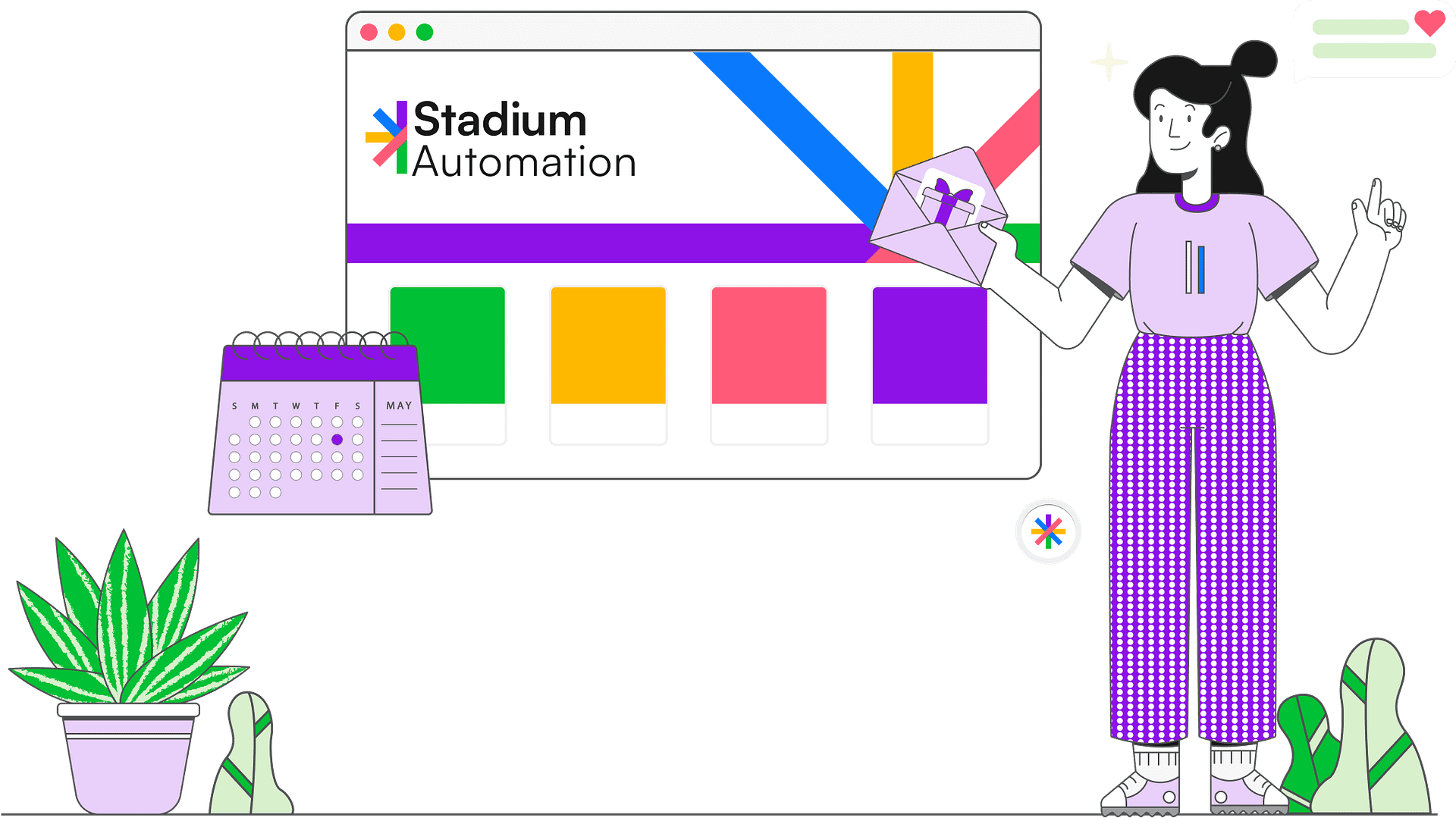
Your do-it-all platform for Rewards. Global Solution
Stadium helps companies operationalize exactly that by building recognition programs, automating milestone moments, and delivering rewards to intern cohorts anywhere in the world, all from one platform.
Whether you’re running ten interns or a hundred, the workflows scale without the administrative lift.
Recognition runs through all of it. Not as a bonus layer added at the end, but as a practical engagement tool that keeps interns feeling connected, valued, and motivated throughout a program that moves quickly.
Are you ready
to take Intern Recognition to a whole new level?
Celebrate your people year-round with HRIS/ATS integrations that automate employee appreciation gifts for work anniversaries, onboarding, and more.





From thoughtful employee onboarding gifts to local fulfillment globally, we make it easy to recognize your team, wherever they are.


