


Employee recognition
Creative Employee Recognition Board Ideas
Build an employee recognition board that doesn't die in month two. 14 ideas, a physical-vs-digital decision guide, and a 7-step setup workflow.
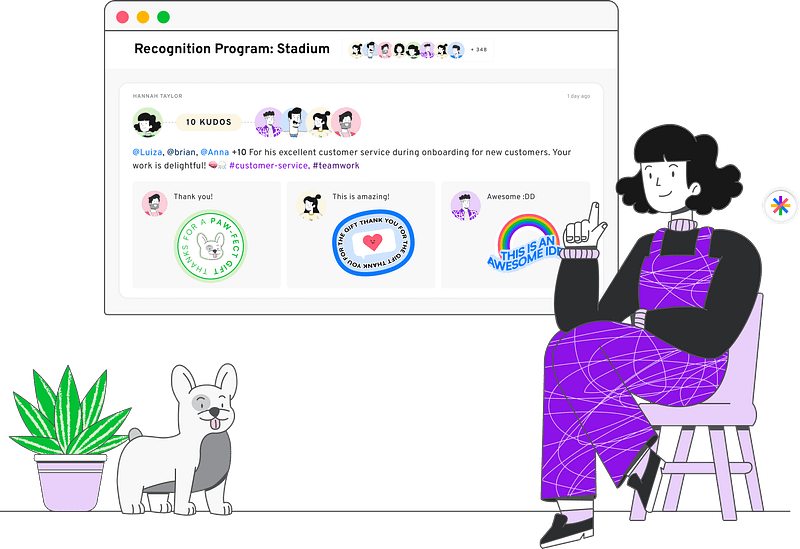








Most recognition disappears the moment it’s said. A manager says “great work” in a meeting. Someone drops a fire emoji in Slack. A thank-you sits in a DM no one else will ever see. By Friday, it’s gone.
A recognition board is the fix when it’s built right. Done well, it keeps appreciation visible, fair, and easy to maintain. Done badly, it becomes a sad corkboard with three sticky notes from last March.
What is an Employee Recognition Board?
An employee recognition board is a physical or digital space where a company publicly celebrates employee wins, milestones, peer shout-outs, and team achievements. The best boards make recognition visible, easy to contribute to, and connected to a larger recognition program.
The board is the visible front-end. Behind it sits the actual program: the criteria, the cadence, the people who feed it. A physical board lives in a break room, lobby, or near the time clock. A digital board lives in a channel, a Feed, or a TV display.
Employees who get frequent recognition are 5 times more inclined to feel appreciated and valued, 6 fold more inclined to invest in their job, and 7 times more likely to stay with their present employer for another year.
Workhuman Research
Table of Contents
Benefits of Employee Recognition Boards
1. How Recognition Boards Boost Morale
Recognition boards play a pivotal role in boosting employee morale by providing public acknowledgment of individual and team accomplishments. The benefits of recognition are evident in how they enhance motivation, increase engagement, and improve retention. Employees who feel appreciated are more likely to stay committed, work harder, and contribute positively to the company culture.
2. Impact on Employee Engagement
When recognition becomes an integral part of an organization’s culture, employee engagement improves significantly. According to employee recognition examples, companies with structured recognition programs see increased productivity and higher retention rates. Stadium simplifies this process with a digital recognition system that ensures every employee’s contributions are acknowledged in real time.
3. Creating a Culture of Appreciation
Building a culture of appreciation requires consistency and fairness. Organizations must address challenges for recognizing employees, such as avoiding favoritism, ensuring transparency, and maintaining engagement across different departments. Stadium’s digital recognition platform ensures equitable recognition by allowing employees and managers to give structured feedback and rewards without bias.
How to Create an Employee Recognition Board
An employee recognition board is a powerful tool for fostering a culture of appreciation and motivation in the workplace. Whether physical or digital, these boards help reinforce company values, celebrate achievements, and boost employee morale. Below is a step-by-step guide to setting up an impactful recognition board that keeps employees engaged and motivated.
Steps to Set Up an Employee Recognition Board
Define Objectives
Before setting up an employee recognition board, establish clear objectives that align with your company culture and goals. Some common objectives include:
- Boosting overall employee morale
- Encouraging teamwork and collaboration
- Recognizing top performers and unsung heroes
- Celebrating work anniversaries, promotions, and milestones
- Reinforcing company values through public recognition

Select the Type of Board
There are two primary types of employee recognition boards: digital and physical. The choice depends on your organization’s needs and structure.
- Digital Recognition Boards: Powered by platforms like ByStadium, digital boards offer real-time updates, accessibility for remote and hybrid teams, and seamless integration with workplace communication tools like Slack and Microsoft Teams.
- Physical Recognition Boards: These serve as visual appreciation hubs in traditional office settings, prominently displayed in high-traffic areas like break rooms or lobbies.
Establish Recognition Criteria
To ensure fairness and transparency, clearly outline the criteria for recognition. Employees should know:
- What achievements and behaviors qualify for recognition
- How often recognition will be given
- Who can nominate employees (peer-to-peer, managers, leadership)
Example recognition criteria:
- Performance-Based: Exceeding targets, successful project completion, outstanding problem-solving
- Behavioral: Demonstrating leadership, teamwork, integrity, or innovation
- Milestones: Work anniversaries, promotions, certifications, and personal accomplishments
Design the Board
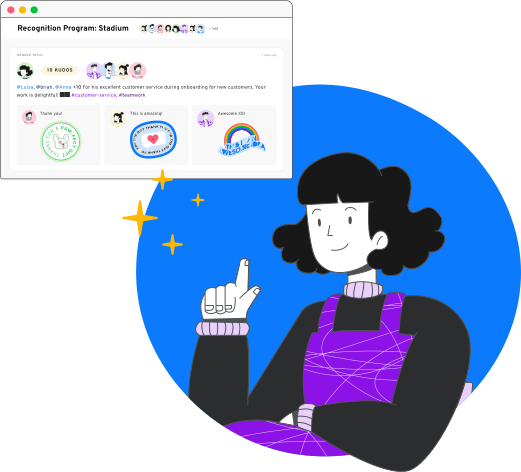
The recognition board should be engaging, visually appealing, and easy to navigate. If physical, use colorful sections, photos, and interactive elements. If digital, incorporate gamification, real-time updates, and interactive features. ByStadium’s platform offers custom design templates and features like:
- User-friendly dashboards
- Employee profiles with achievements
- Integration with company swag stores for rewards
- Automated recognition based on predefined milestones

Promote Participation
Encouraging employee participation is key to making the recognition board successful. Some ways to drive engagement include:
- Encouraging peer-to-peer recognition – Let employees nominate and appreciate each other.
- Offering incentives – Employees can earn rewards or redeem kudos points from ByStadium’s swag store.
- Integrating recognition into meetings – Give shout-outs during team huddles and company-wide town halls.
- Making it interactive – Allow employees to react, comment, or add personalized messages to digital boards.

Maintain and Update Regularly
A stagnant recognition board loses its effectiveness. Regular updates and new content ensure sustained engagement. Some best practices include:
- Refreshing employee highlights weekly or monthly
- Rotating themed recognition categories (e.g., Innovator of the Month, Team Player Spotlight)
- Adding leaderboards or gamified recognition challenges
- Tracking engagement metrics using ByStadium’s analytics tools
Employee Recognition Board Ideas for Work
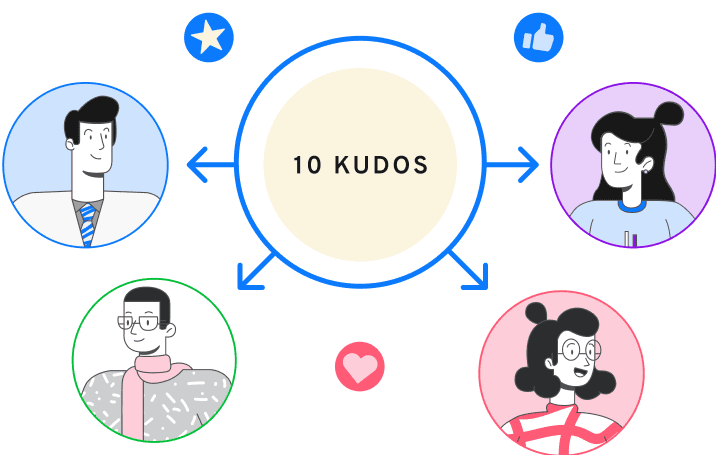
1. Peer-to-Peer Recognition Boards
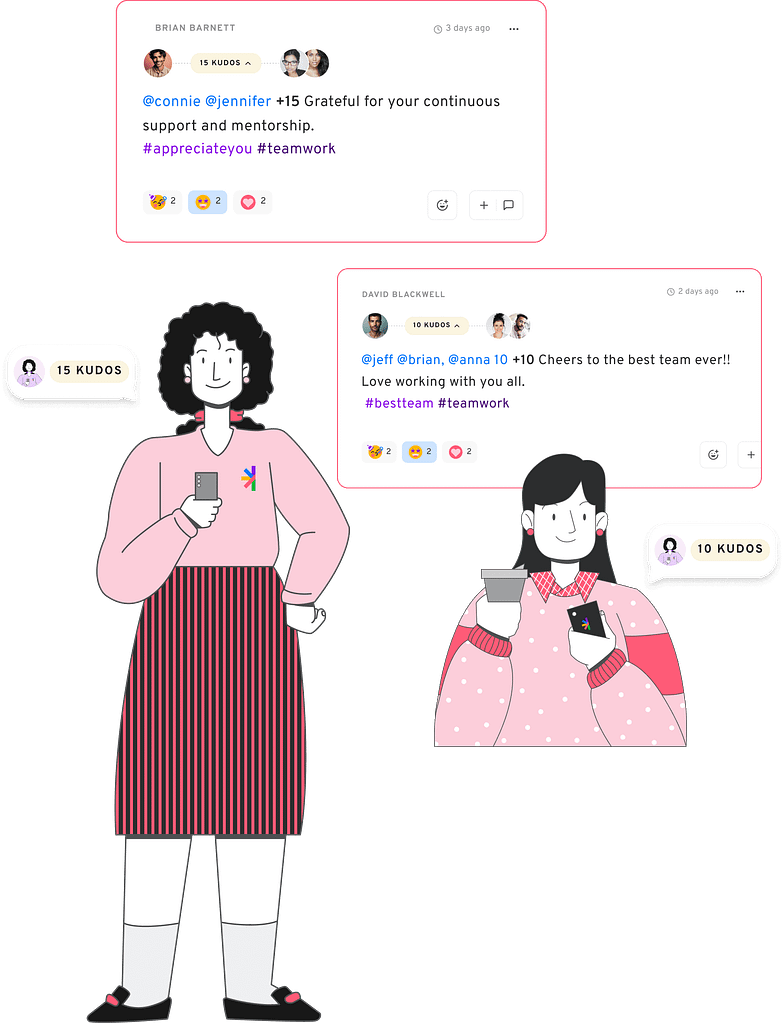
Encouraging peer recognition fosters a positive work environment where employees feel valued by their colleagues. A peer-to-peer recognition board allows employees to post shout-outs, thank-you notes, and words of appreciation for their teammates. This could be a physical bulletin board in the office or a digital space integrated into the company’s internal communication platform.
To enhance engagement, implement a kudos points system, where employees can award points to their colleagues for outstanding efforts, teamwork, or kindness. These points can then be redeemed for rewards, such as branded swag from the Stadium store, gift cards, or extra time off. Peer-to-peer recognition strengthens team dynamics and ensures that appreciation isn’t solely dependent on management.
What it highlights: employee-to-employee thank-yous, week by week.
Who contributes: anyone, anytime.
Physical version: a corkboard with index cards and a colored marker per team.
Digital version: a Slack or Teams channel that auto-posts shout-outs into a #praise feed.
Example: “Maya stayed two hours late helping me debug the deploy. Saved us a Friday outage. Thanks, Maya.”
The peer board does what manager-only recognition cannot. Appreciation stops living in one-on-one DMs and becomes something the whole team sees.
Employee of the month board
What it highlights: one person, one month, one clear reason.
Who contributes: managers nominate, peers second.
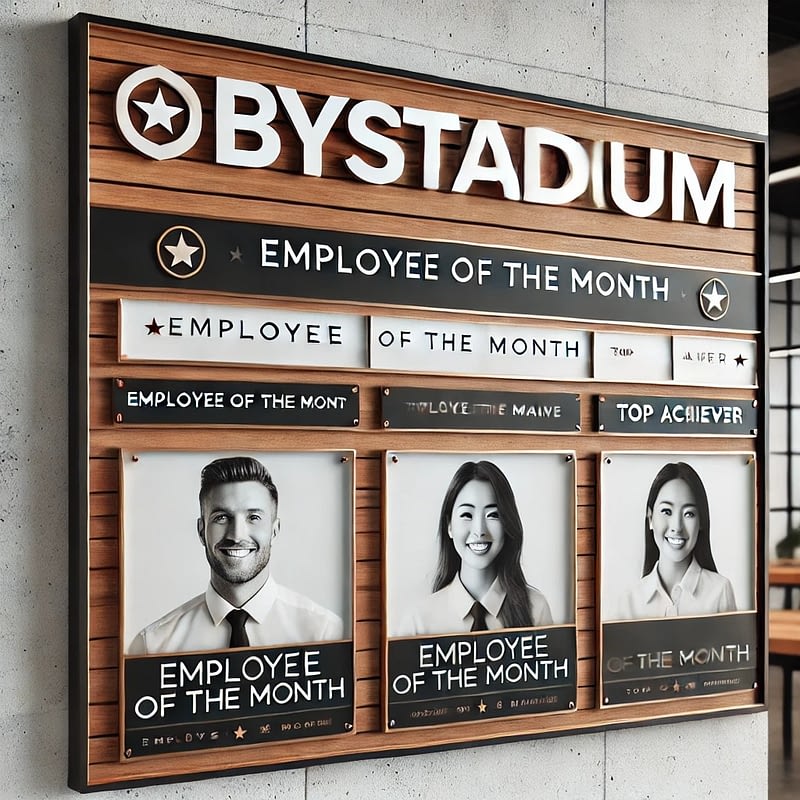
Physical version: a framed photo and a written paragraph explaining why.
Digital version: a featured post pinned to the top of the recognition channel for the month.
Rotate the criteria. One month for impact. One for behind-the-scenes work. One for living a value. The trick is variety, so the same five people don’t win every quarter.
Values-in-action board
What it highlights: real moments where employees lived a company value.
Who contributes: managers and peers.
Physical version: each value gets its own zone on the board, with sticky notes underneath.
Digital version: a tag system in the recognition channel: #integrity, #craft, #ownership.
Example: “Sara pushed back on a deadline because the QA wasn’t done. That’s our craft value in action.”
This board turns abstract values into concrete behavior. That’s the only way values actually stick.
Milestone celebration board
What it highlights: work anniversaries, promotions, project finishes, certifications.
Who contributes: HR runs the cadence; managers add color.
Physical version: a “this month at [company]” header with photos and a one-line story per milestone.
Digital version: an automated Feed tied to the HRIS.
Workato used Stadium Shops to send branded swag to 82 employees across 13 countries for milestone moments. A paper anniversary card can’t pull that off.
Milestones are recognition’s easiest win. Every employee gets at least one a year. Don’t waste them.
Team wins board
What it highlights: cross-functional projects, launches, and goals hit.
Who contributes: team leads.
Physical version: a “we shipped it” wall with screenshots, product photos, or a printed metric.
Digital version: a Slack post template every team uses when something ships.
Example: “Q1 launch hit 12,000 sign-ups, 30% above target. Engineering, product, marketing, and CS all did the work.”
Team wins remind everyone the company moves because groups move, not because heroes do everything alone.
Customer praise board
What it highlights: real customer quotes from CSAT, NPS, sales calls, or emails.
Who contributes: CX, sales, and success teams forward the best ones in.
Physical version: a wall of printed quotes or screenshots, refreshed weekly.
Digital version: a #customer-love channel that gets cross-posted to the recognition board.
Example: “I’ve worked with three vendors. This is the first one I’ve ever recommended to a friend.” Posted March 2026.
Customer praise gives non-customer-facing teams (engineering, ops, finance) a line of sight to the impact of their work.
Digital kudos board
What it highlights: lightweight peer recognition that scales beyond one office.
Who contributes: everyone, ideally daily.
Physical version: not the move. This one’s digital by design.
Digital version: an in-platform Feed where employees give kudos with a short message, an optional value tag, and (when the program allows) Stadium Points the recipient can spend in a shop.
Example: “Kudos to Devon for the late-night save on the deploy. +50 points.”
This is the board that pulls remote and global employees into the same recognition rhythm as the on-site team.
Remote team recognition board
What it highlights: appreciation that crosses time zones without losing visibility.
Who contributes: managers and peers across every region.
Physical version: a regional break-room version for in-office hubs.
Digital version: a Feed that runs across locations, time zones, and shifts, with rewards fulfilled in 170+ countries so a thank-you in Singapore lands the same as one in Chicago.
Example: a Manila engineer wins a peer shout-out on Monday morning; the manager in Berlin sees it Monday afternoon.
The remote board’s job is to make distributed recognition feel as immediate as in-person recognition. Global fulfillment is what closes the loop.
Leadership recognition board
What it highlights: when managers and leads model the behavior they want to see.
Who contributes: direct reports nominate up; HR curates.
Physical version: a “leaders we appreciate” wall, updated quarterly.
Digital version: a quarterly highlight reel of leadership moments employees called out.
Example: “Erin sat in the support queue for a day after a launch. That isn’t in her job description.”
This board is the antidote to “recognition only goes one way.” Leaders earn appreciation too, visibly.
Learning and growth board
What it highlights: certifications, courses finished, conference talks, mentorship.
Who contributes: learners themselves, plus their managers.
Physical version: a “what we learned this month” board with course names, badges, and short reflections.
Digital version: a channel tagged #learning with auto-posts when someone completes a course in the LMS.
Example: “Just passed the AWS Solutions Architect exam. Took six weeks of weekends. Worth it.”
Recognizing learning publicly turns L&D from a checkbox into a culture signal.
Kindness and gratitude board
What it highlights: small, human acts. Covering a shift, bringing coffee, listening when it was hard.
Who contributes: anyone, anonymously if needed.
Physical version: a gratitude jar plus a wall where the notes get posted weekly.
Digital version: a #gratitude channel with a low-pressure norm. One post a day is plenty.
Example: “Thank you to whoever restocked the snack box on Friday. That was you saving Monday.”
The kindness board catches what performance reviews never will: the connective tissue of the team.
New hire welcome board
What it highlights: every person who joins, their role, and one fact about them.
Who contributes: HR and the hiring manager.
Physical version: a “welcome to the team” board near reception with photos and bios for the past month.
Digital version: a #new-faces channel with intro posts and a thread for welcomes.
Example: “Welcome Priya, joining product as a senior PM. She runs ultramarathons in her spare time.”
First impressions of the company are formed in the first two weeks. The welcome board makes those weeks feel personal.
Birthday and work anniversary board
What it highlights: the dates that matter to one person, and that nobody should miss.
Who contributes: HR (automated) and peers (manual messages).
Physical version: a “this month” calendar wall, updated on the first of the month.
Digital version: an automated reminder in Slack or Teams plus a recognition post on the day.
Example: “Five years today, Marcus. The week of the holiday rush wouldn’t survive without him.”
Automating the date doesn’t kill the moment. It guarantees it. Missed anniversaries cost more morale than the celebration ever spends.
Recognition plus rewards board
What it highlights: recognition that translates into something real.
Who contributes: anyone who gives kudos; the recipient picks the reward.
Physical version: a board that displays “this week’s recognized” plus a QR code linking to the rewards shop.
Digital version: a Feed integrated with Stadium Points, where a peer shout-out comes with points the recipient can spend on swag, a snack box, or a gift card.
Example: a kudos for closing a tough deal carries 100 points; the recipient picks a noise-cancelling headset from the catalog.
This is the board that takes recognition from “nice words” to “I remember this.”
How to Maintain an Employee Recognition Board
To keep engagement high, organizations must ensure their recognition boards are consistently updated. Types of employee recognition should be varied, including performance-based recognition, behavioral recognition, and personal achievement recognition. Additionally, providing employees with new ideas for employee recognition, such as rotating themes or introducing gamified elements, can help sustain excitement and participation.
Regular Updates and Engagement Strategies
Keep the board fresh by updating it weekly or monthly.
Rotate themes to keep employees engaged and excited.
Incorporate employee feedback on what type of recognition they value most.
Measuring the Impact of Recognition Efforts
- Track employee engagement with the board (e.g., number of posts, peer recognition frequency).
Conduct surveys to assess how recognition influences job satisfaction.
Analyze retention rates and performance metrics to gauge effectiveness.
Encouraging Team Member Participation
Offer incentives for contributions to the board.
Make participation easy with simple submission methods.
Recognize employees who actively contribute to the recognition culture.
Types of Employee Recognition Boards
Physical Recognition Boards
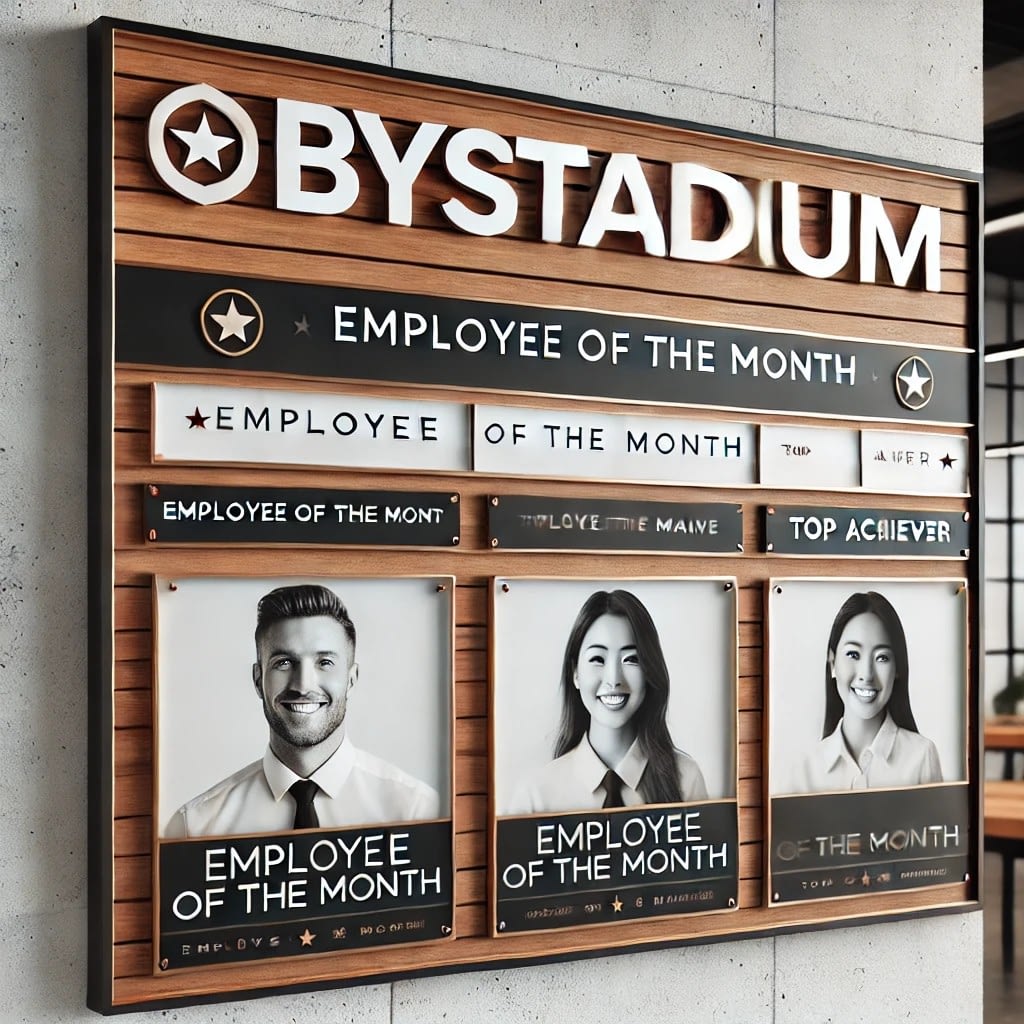
Typically displayed in common areas such as break rooms or lobbies, these boards showcase employee achievements through photos, notes, and awards.
They offer a tangible and visible reminder of appreciation within the workplace.
Digital Recognition Boards
Leveraging technology, digital boards utilize platforms like ByStadium to create interactive and accessible recognition systems.
These boards can be integrated into company intranets or collaboration tools, allowing remote and on-site employees to participate equally.
The digital platform supports peer-to-peer recognition, milestone celebrations, and reward redemption.
Peer-to-Peer Recognition Boards
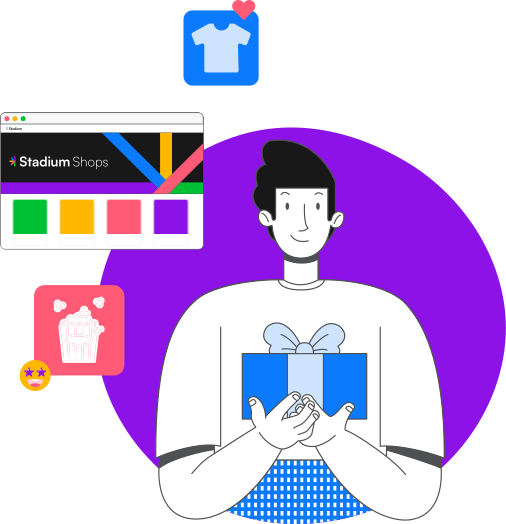
Designed to encourage colleagues to acknowledge each other’s efforts, these boards promote a culture of mutual respect and camaraderie.
Employees can give kudos points to their peers, which they can later redeem as gifts from the ByStadium swag store, reinforcing a culture of appreciation through tangible rewards.

Themed Recognition Displays
Focusing on specific themes such as “Employee of the Month,” “Innovation Champions,” or “Customer Service Stars,” these boards highlight particular achievements and motivate others to excel in those areas.
ByStadium’s recognition system can automate these awards, ensuring consistent and unbiased recognition.

Also Consider: How AI Can Transform HR and Appreciation
How Stadium Helps Turn Recognition Boards Into Recognition Programs
A board makes recognition visible. A program makes it repeatable. Stadium connects the two, so the appreciation that starts as a post on a Feed becomes a real reward fulfilled in the recipient’s country, on schedule, without HR chasing logistics.
Four pieces tie the board to the program:
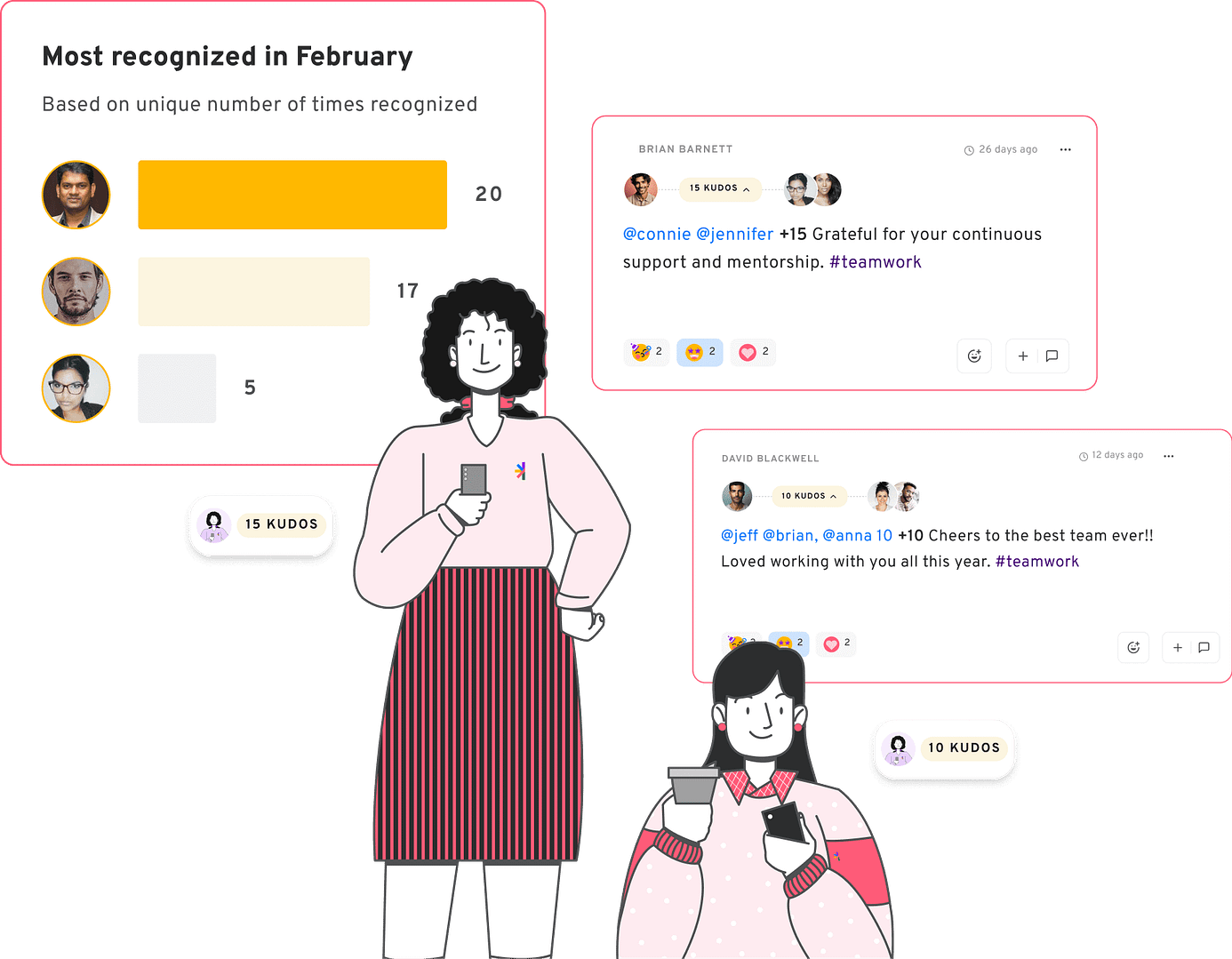
- The Feed is the digital board where peer kudos, milestones, value moments, and customer praise live.
- Stadium Points turn recognition into something tangible, with recipients spending on swag, snack boxes, gift cards, or any of 25,000+ catalog products.
- The Automation Dashboard runs birthdays, work anniversaries, onboarding, and milestone gifts on autopilot. No missed moments, no manual chasing.
- Global fulfillment in 170+ countries means a thank-you in Manila lands as cleanly as one in Chicago. No customs drama, no surprise duties.
- Peer-to-peer, senior-to-junior, and vice versa
- Assign monetary value to kudos or keep them free
- Integrate with Teams, Slack, or use our platform
- 1M+ gifts from top brands + customizable swag
- Enable kudos to flow freely across your org chart
Are you ready
to take recognition to a whole new level?

