

Stadium for Onboarding

Onboarding Summer Interns: A Practical Guide for HR Teams

A stage-by-stage framework for running summer intern onboarding that actually works -- for cohorts of any size, anywhere. One platform to welcome interns with swag, snacks, and rewards—delivered globally, minus the logistics.

Intern Day

Summer internship season has a way of arriving all at once. One week you’re finalizing offer letters, and the next you have ten new interns showing up on the same Monday, each assigned to a different team, each expecting to hit the ground running.

 The challenge isn’t just logistics it’s that most onboarding processes weren’t designed for this.

Standard employee onboarding is built for individuals joining one at a time, with weeks to ramp up and months to settle in. Summer intern cohorts don’t work that way. The timeline is short, the starting line is shared, and the window to make the experience count is narrow from day one.

That’s what this guide is for.

Whether you’re running a summer internship program for the first time or refining one that’s been in place for years, what follows is a practical operational framework for onboarding summer interns from preparation before they arrive through the first weeks of the program.

You’ll find guidance on coordinating across teams, structuring early days, integrating interns into real work, and maintaining engagement throughout the program.

Employee Onboarding Solution
Choose from a variety of gifting and engagement experiences — all customizable to your own brand. No monthly fees. No contracts.

Structured onboarding outcomes (faster productivity + engagement + retention): HiBob also cites Aberdeen research that structured onboarding results include higher productivity faster (65%), higher engagement/inclusiveness (69%), and higher retention (50%)

Table of Contents

Why Summer Intern Onboarding Requires a Different Approach

Intern Day 2

Most companies already have an onboarding process.

The problem is that it was built for fulltime hires individuals joining one at a time, with a standard ramp up period and a long runway ahead of them.

Apply that same process to a summer intern cohort and the gaps become obvious fast.

Summer internships operate under a completely different set of conditions.

Interns typically arrive all at once, often on the same day, assigned across multiple teams and managers. The program runs for weeks, not months.

There’s no extended settling period; interns need enough structure and clarity to start contributing almost immediately.

The cohort dynamic also changes the coordination challenge for HR.

You’re not onboarding one person. You’re onboarding a group, simultaneously, while aligning managers who may have different levels of experience supervising interns and different expectations about what intern support actually looks like.

Without deliberate design, that quickly becomes inconsistent; some interns get a strong start, others drift.

 There’s also the experience reality: many summer interns are early in their careers, often entering a professional environment for the first time.

They tend to need clearer communication norms, more explicit structure, and earlier feedback than a seasoned hire would.

What feels like an obvious expectation to a manager can be genuinely unclear to someone three weeks into their first internship.

 None of this makes summer intern onboarding harder than employee onboarding it just makes it different.

The goal isn’t to build a more elaborate process. It’s to build the right one: designed around cohort logistics, compressed timelines, and deliberate engagement from the start.

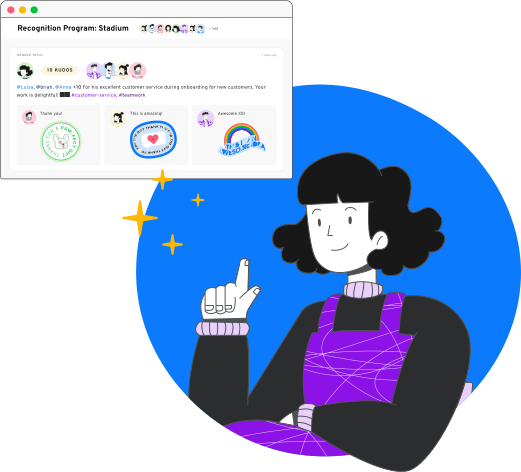
Recognition plays a role here too, helping interns feel genuinely included and valued early on, before the novelty of the first week fades and the real work begins.

Preparing Before Summer Interns Arrive

The quality of intern onboarding is largely determined before interns set foot in the building. HR teams that treat prearrival preparation as a checklist item tend to find themselves troubleshooting avoidable problems in week one. Teams that treat it as a coordination exercise get a very different outcome.

project manager working and update tasks with milestones progress planning

1. Confirm roles and project scope with managers

Every intern should arrive with a clear answer to the question: what am I here to do?

That means HR needs to work with hiring managers ahead of the start date to confirm that each intern’s role is defined, their project scope is scoped and ready, and their manager knows what the first two weeks of work actually looks like.

Vague project briefs handed to interns on day one are one of the most common reasons intern programs underdeliver.

2. Align managers on supervision expectations

 For many managers, supervising an intern is different from managing a fulltime direct report and not every manager has done it before.

Before the cohort arrives, HR should set clear expectations: how often managers should check in, what feedback cadence looks like, and what level of guidance interns are likely to need early on.

A short preprogram briefing or manager guide goes a long way toward making that consistent across teams.

3. Prepare onboarding materials in advance

 Intern specific onboarding materials should be ready before day one not assembled the morning of.

That includes program overviews, team introductions, communication norms, tools and systems guides, and any intern handbook or resource documents.

If interns are expected to complete any prereading or administrative steps before starting, those instructions should go out well in advance.

4. Coordinate start dates across teams

 When interns across different teams start on the same day, shared onboarding programming becomes possible cohort welcome sessions, group introductions, and collective orientation moments that help interns connect with each other from the start.

That only works if start dates are aligned. HR should confirm dates with every team early enough to build the day one experience around the full cohort.

5. Set up tool and system access before arrival

 Few things disrupt an intern's first week more reliably than not having access to the tools they need to do their work.

System access, communication platforms, and any project specific tools should be provisioned and tested before interns arrive not submitted as a ticket on the morning of day one.

Designing an Effective First Day for Summer Intern Cohorts

A first day that feels unplanned communicates something to interns and it's not the impression most HR teams are going for. When multiple interns start on the same day, there's both more at stake and more opportunity. Done well, a cohort first day creates early momentum, builds connections across the group, and sets a tone that carries through the rest of the program.

you are welcome

1. Open with a structured welcome session

 The first hour matters more than most programs treat it. A structured welcome session led by HR or a senior program owner gives the cohort a shared starting point.

Cover what the program is, how it’s structured, what interns can expect over the coming weeks, and what success looks like.

This isn’t orientation theater. It’s the moment interns form their first impression of how seriously the company takes the program.

 This is also a natural moment to recognize interns as a cohort acknowledging that they’ve earned their place in the program and that the company is genuinely glad they’re there.

A simple, well executed welcome moment lands far better than a generic “glad to have you” buried inside a slide deck.

2. Walk through program structure and expectations

 After the welcome, give interns a clear picture of the program timeline: key dates, milestones, how performance feedback works, and what the end of the program looks like.

Interns who understand the shape of the program from the start are better positioned to set their own goals and manage their time well. Don't assume they'll piece it together over the first few weeks lay it out clearly on day one.

3. Facilitate team and cohort introductions

 Interns need to know two groups of people: their immediate team and their fellow interns.

Both introductions deserve deliberate structure, not an informal "find someone to talk to at lunch." Scheduled time with each intern's direct team helps them understand who they're working with and how the team operates.

Cohort introductions, even something as simple as a facilitated group session, help interns build peer connections early, which pays off throughout the program.

4. Establish communication norms and tools

By the end of day one, every intern should know how the company communicates which platforms are used for what, how responsive people typically are, how to ask for help, and what the norms are around things like meeting culture and response times.

These feel like small details, but for early career interns entering a professional environment, they're the kind of clarity that reduces anxiety and speeds up integration.

Structuring the First Week of the Internship

The first day sets the tone. The first week sets the trajectory. How interns spend their initial five days has an outsized effect on how quickly they become productive, how confident they feel, and whether they develop an accurate sense of what the program expects from them.

group of diverse team members attending training at office

1. Build in skills and systems training early

Most interns will need some level of training on the tools, platforms, and processes they’ll be using day to day.

This shouldn’t be left to chance or delegated entirely to individual managers.

HR and team leads should identify the core training interns need in week one and schedule it deliberately ideally in the first two or three days, before project work is fully underway.

Getting this out of the way early means interns can focus on actual contributions rather than figuring out basic logistics mid project.

2. Onboard interns to their projects with clarity

 Project onboarding deserves its own dedicated time, separate from general orientation.

Each intern should come out of week one with a clear understanding of their project scope, the problem they're working on, what deliverables are expected, and what a strong outcome looks like.

Managers should walk through this directly not hand over a brief and assume interns will interpret it correctly. The clearer the brief, the faster interns can move.

 3. Establish a regular manager check in cadence

 Week one is the right time to establish check in rhythms that will carry through the program.

A short, structured check in between each intern and their manager two or three times in the first week gives interns an early channel for questions, helps managers spot confusion before it compounds, and signals that feedback is a normal, expected part of how the program runs.

Starting this cadence in week one means it doesn't feel like an intervention later.

 4. Create early feedback loops

 Interns should not have to wait until a mid program review to understand how they're performing.

Simple, informal feedback in week one a quick conversation after a first deliverable, a note on what landed well and what to adjust gives interns the calibration they need to improve quickly.

Early career professionals in particular benefit from explicit feedback that more experienced hires might not need.

 5. Make space for cohort connection

Alongside the work, the first week should include at least one opportunity for interns to connect with each other as a group.

This doesn't need to be elaborate a shared lunch, a brief cohort catchup session, or a casual end of week check in all work.

Cohort connection established in week one tends to sustain itself through the rest of the program. Left unstructured, interns default to their immediate team and the broader cohort community never quite forms.

Integrating Interns Into Teams and Projects

Onboarding gets interns oriented. Integration is what makes them useful and what makes the internship feel meaningful to them. The difference between an intern who contributes and one who observes usually comes down to how deliberately they were brought into real work and real team dynamics.

1. Define project scope so interns know what success looks like

 Ambiguity is the enemy of intern productivity.

When project scope is vague, interns default to doing less rather than risk overstepping and managers default to frustration rather than recognizing that the brief was the problem.

Before an intern starts working, their manager should be able to answer three questions clearly: what is this intern working on, what does a strong output look like, and when is it due.

Everything else follows from that.

 2. Set manager expectations for working with interns

 Managing an intern well requires a slightly different approach than managing a fulltime employee.

Interns typically need more explicit direction, more frequent check ins, and more context about why work matters not because they lack capability, but because they lack the organizational familiarity that comes with time.

HR can support managers by setting clear expectations about communication frequency, feedback style, and the level of guidance interns are likely to need, particularly in the first few weeks of the program.

3. Bring interns into team communication channels and workflows

Integration means being included, not just informed.

Interns should be added to the team communication channels, meeting invitations, and shared workspaces that are relevant to their role not kept on the periphery until they've "proven themselves."

Being part of the flow of team communication from the start helps interns understand context, ask better questions, and contribute more meaningfully.

 4. Offer cross team exposure where possible

 One of the things interns value most about a program is breadth of experience.

Where schedules allow, building in some cross team exposure a session with a different department, a project touchpoint with a team outside their primary placement, or a speaker series featuring leaders from across the business adds real value to the internship without significantly disrupting anyone's work.

 5. Encourage collaboration within the intern cohort

 Interns bring a natural peer network into the program they just need encouragement to use it.

Where projects allow for collaboration across the cohort, HR and managers should actively facilitate it rather than leaving interns siloed within their individual teams.

Recognizing intern collaboration and strong contributions as they happen reinforces that working well and working together is something the company notices and values.

Keeping Summer Interns Engaged Throughout the Program

The energy of a well designed first week doesn't sustain itself. Around the midpoint of most internship programs, engagement starts to drift not because interns lose interest, but because the structured attention of onboarding fades and nothing deliberate replaces it. Maintaining engagement throughout the program requires the same operational intention that went into the first day.

1 Build milestone checkins into the program calendar

 Regular, structured checkins between HR and the intern cohort not just between interns and their direct managers help HR teams stay ahead of engagement issues rather than discovering them in exit interviews.

A brief midpoint checkin and an end of program debrief, both scheduled in advance, give interns a consistent channel to share how the experience is going.

They also signal that HR is paying attention beyond week one.

 2 Run cohort events throughout the program

 Cohort connection built in the first week needs programming to sustain it.

Scheduling events throughout the program whether professional development sessions, informal social gatherings, or cohort lunch and learns keeps the intern community active and gives interns something to look forward to beyond their day to day project work.

These don't need to be elaborate. Consistency matters more than production value.

3 Maintain structured feedback loops

Feedback shouldn't be reserved for the end of the program.

Interns benefit from knowing where they stand at regular intervals what's going well, what needs adjustment, and what they should focus on in the weeks ahead.

HR can support this by setting expectations with managers around feedback cadence, and by creating lightweight touchpoints that keep the conversation going throughout the internship rather than concentrating it all at the close.

4 Recognize intern achievements as they happen

 Recognition is one of the most effective and underused tools in intern engagement.

When an intern completes a significant milestone, delivers a strong project, or makes a visible contribution to their team, acknowledging it promptly and specifically reinforces the behaviors you want to see more of and tells interns that their work is being noticed.

 5 Build intern community deliberately

 Community doesn't develop on its own in an eight- or ten-week program.

HR teams that treat cohort connection as a background condition tend to end up with a group of interns who worked in the same building but never really knew each other.

Deliberately building intern community through shared experiences, peer recognition, and cohort programming creates an internship that interns talk about long after the summer ends.

Evaluating Intern Success and Improving Future Programs

The last week of a summer internship program is easy to treat as a winddown. Interns are wrapping up projects, managers are busy, and HR is already thinking about what comes next. But the close of the program is one of the most valuable operational moments in the entire internship cycle and teams that handle it well build a compounding advantage into every cohort that follows.

1 Collect structured feedback from interns

 Intern feedback is most honest and most useful when it's collected through a structured process at program close not through an informal conversation on the last day.

A short, well-designed survey covering onboarding experience, project quality, manager support, and overall program design gives HR concrete input to work with.

Interns are often remarkably candid when given a proper channel, and their perspective on what worked and what didn't is harder to get from any other source.

 2 Gather manager evaluations

 Manager input on intern performance rounds out the picture from the other direction.

A consistent evaluation format across all managers covering things like project delivery, communication, initiative, and collaboration makes it easier to compare fairly across the cohort and identify standout performers.

It also creates a record that's useful if those interns are considered for future roles.

 3 Run a program retrospective with the HR team

 Beyond individual feedback, HR teams benefit from a structured retrospective on the program itself.

What went smoothly in prearrival preparation? Where did onboarding feel inconsistent? Which cohort events landed well? What would have made manager alignment easier?

A focused internal debrief at program close while the details are still fresh surfaces the operational improvements that don't show up in intern surveys.

 4 Build a talent pipeline from the cohort

 Summer internships are one of the most effective early career recruiting pipelines available but only if the program is designed to identify and track strong performers.

HR teams should leave each program with a clear view of which interns would be strong candidates for future roles, whether that's a return internship, a graduate hire, or a longer-term pipeline prospect.

That list should be documented and shared with relevant hiring managers before the cohort disperses.

 Recognition data and engagement patterns throughout the program can also offer useful signals here.

Interns who consistently received recognition for strong contributions, who were active in cohort programming, and who maintained strong manager feedback across the program tend to be the ones worth staying in contact with.

It's not a perfect filter, but it adds useful texture to a hiring conversation.

Stadium- Building an Intern Program Worth Coming Back To

Your do-it-all platform for Rewards. Global Solution

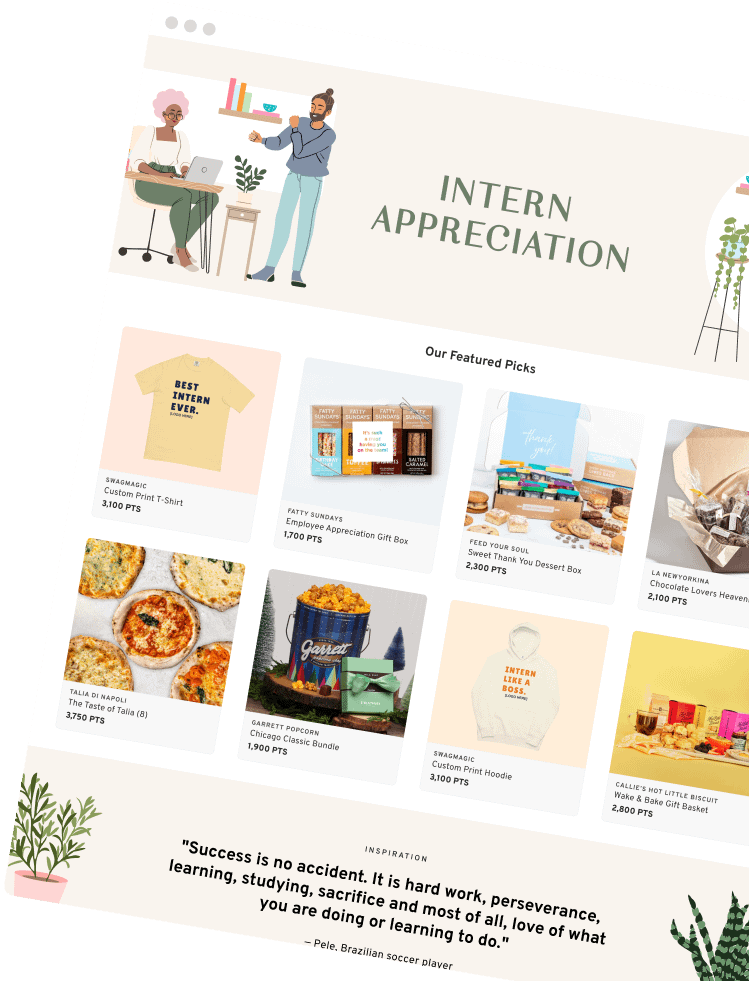
Stadium helps companies operationalize exactly that by building recognition programs, automating milestone moments, and delivering rewards to intern cohorts anywhere in the world, all from one platform.

Whether you’re running ten interns or a hundred, the workflows scale without the administrative lift.

Recognition runs through all of it. Not as a bonus layer added at the end, but as a practical engagement tool that keeps interns feeling connected, valued, and motivated throughout a program that moves quickly.

How leaders use Stadium

Create tailored online shops

Launch a custom employee rewards shop with your branding, curate your catalog, and personalize the experience for clients and prospects.

  • Include your logo and branding.

  • Select items and custom swag from our catalog.

  • Customers pick their own items and shipping destinations.

Create tailored online shops

Boost Brand Awareness

Strengthen your brand presence by offering branded swag, custom shops, and on-demand merchandise to clients and prospects, creating a lasting impression.

  • Promote your brand with custom-branded merchandise.

  • Create branded swag stores for clients and prospects.

  • Leave a lasting brand impression with quality promotional products.

Stadium personalised shops

Simplify Gifting Workflows

Integrate Stadium with your CRM or marketing automation tools, automate gifting, and enhance your client engagement strategy effortlessly.

  • Connect Stadium with your CRM for seamless data flow.

  • Automate gift sending based on client interactions.

  • Elevate client engagement with automated gifting campaigns.

Simplify Gifting Workflows

Are you ready
to take Intern Recognition to a whole new level?

Stay in sync with your team

Celebrate your people year-round with HRIS/ATS integrations that automate employee appreciation gifts for work anniversaries, onboarding, and more.

Bamboohr logo
UKG logo
Gusto Logo
ADP Logo
Paylocity Logo
Justworks logo
Workday Logo
Namely Logo
Workable Logo
EMPLOYEE ONBOARDING SOLUTION

Ready to recognize employees in ways that actually land?

From thoughtful employee onboarding gifts to local fulfillment globally, we make it easy to recognize your team, wherever they are.