Stadium for Employee Engagement
33 employee engagement ideas that work, for in-office, remote, and tight-budget teams. Ideas your people feel, not just pin to a board.
Most engagement ideas are easy to brainstorm and hard to run.
The team lunch, the recognition program, the swag drop, the wellness perk – someone still has to source it, ship it, track who got it, and do the whole thing again next month, across time zones and on a budget that never quite stretches.
The idea takes five minutes. The delivery takes five weeks.
So the good ideas stall. The recognition program launches with a bang and goes quiet by March. The remote hire in Manila waits three weeks for a welcome kit that a customs office is still holding. And “we tried that once” quietly becomes the culture.
This article fixes the delivery problem.
Below are 33 employee engagement ideas grouped so you can pick by goal – recognition, connection, growth, and wellbeing – plus dedicated sets for remote teams and tight budgets, a five-step framework for improving engagement, and a short guide to measuring whether any of it is working.
Where it helps, you’ll also see how to actually deliver each idea without the logistics drama.
Employee engagement is the emotional commitment a person feels to their work, their team, and the organization’s goals – commitment that shows up as discretionary effort, initiative, and the decision to stay.
It’s not a mood or a perk; it’s the difference between someone who does the job and someone who cares how the job turns out.
For an HR leader, engagement is the lever that quietly moves retention, productivity, and culture.
It’s easy to confuse engagement with satisfaction, but they’re not the same thing.
A satisfied employee is content – the pay is fair, the commute is fine, the coffee is decent.
An engaged employee is invested – they bring ideas to the meeting, they help the new hire, they flag the problem before it becomes a fire.
You can be perfectly satisfied and completely checked out, which is exactly why free snacks and a foosball table rarely move performance on their own.
The other thing worth naming: engagement is built year-round, through everyday moments and milestones, not at one annual party.
People don’t feel invested because of a single event in March.
They feel invested when they’re recognized for real work in the moment, when their work anniversary doesn’t get missed, and when the good ideas on this list actually reach them and that is when ROI of employee engagement can be calculated.
That’s the thread running through everything below.
Recognition is the highest-leverage engagement habit most teams under-use.
It’s cheaper than a new benefit, faster than a culture overhaul, and it works every time a person feels seen for their work.
The catch is that recognition only moves engagement when it’s frequent, specific, peer-driven, and tied to a reward the recipient actually wants – not one generic award handed out once a year.
That last part matters more than it sounds. The reason this section is the heart of the article is that most engagement lists name “recognition programs” and “spot awards” as bullet points, then move on – with no way to deliver the reward across a distributed team.
One thing worth internalizing before the ideas: a reward means far more when the recipient chooses it.
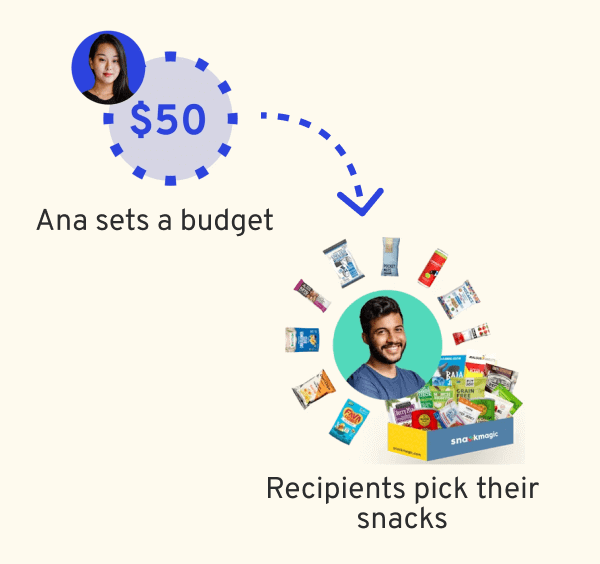
The same $50 lands completely differently as a jacket nobody asked for versus a gift the person picked themselves.
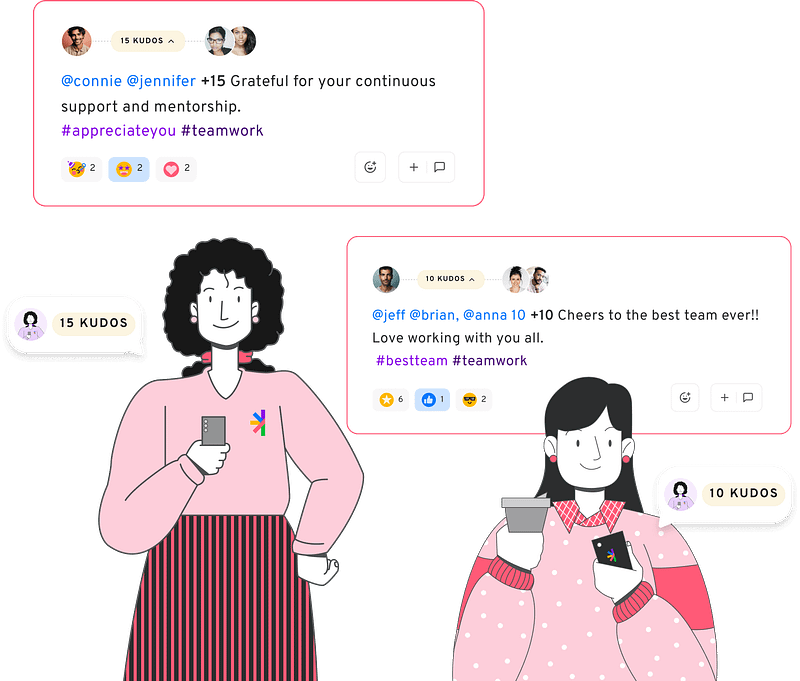
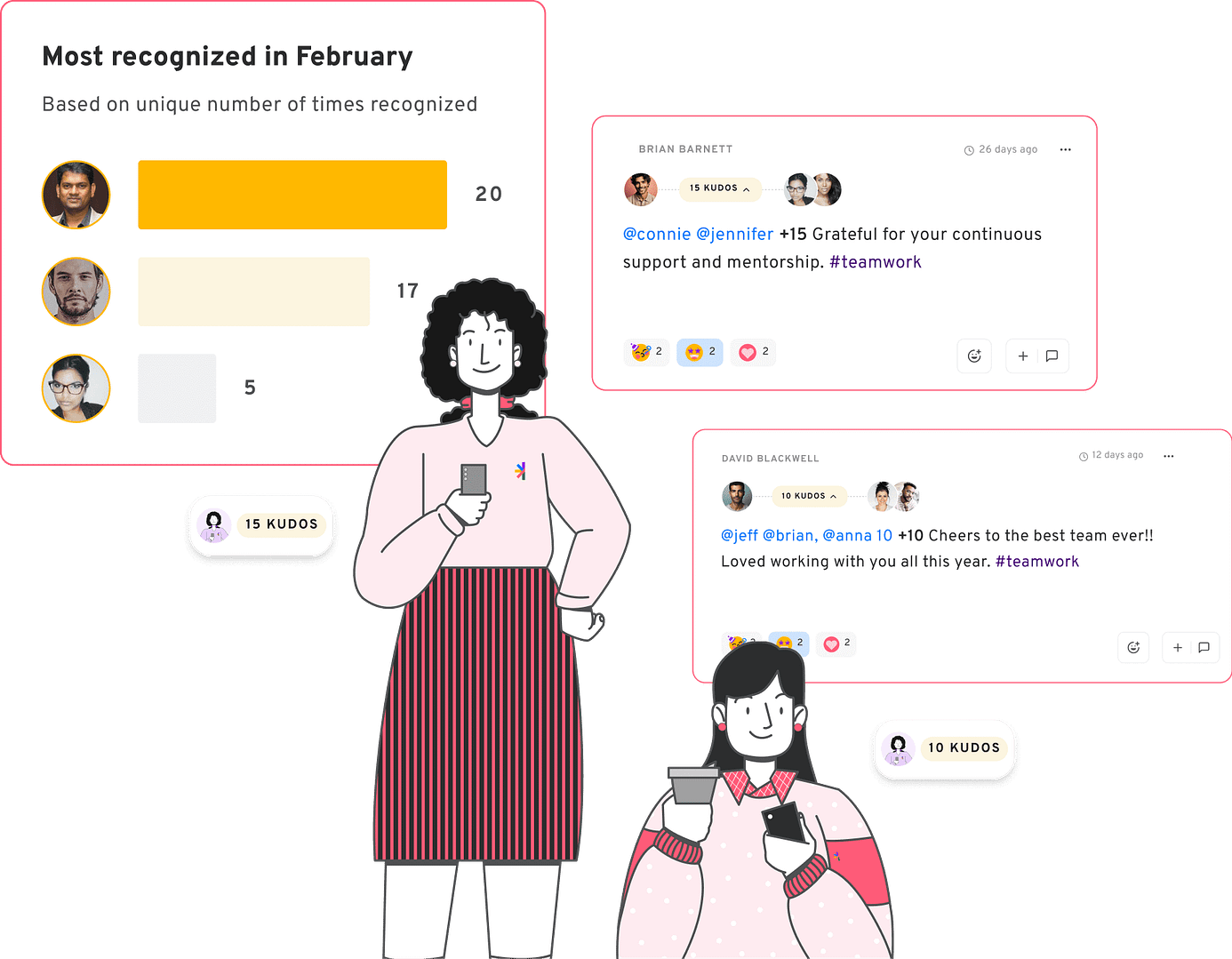
Stand up a recognition program where anyone can recognize anyone, in the moment, tied to points the recipient can redeem.
The magic is in the peers: your managers miss half the great work on a team, but the person sitting next to it doesn’t.
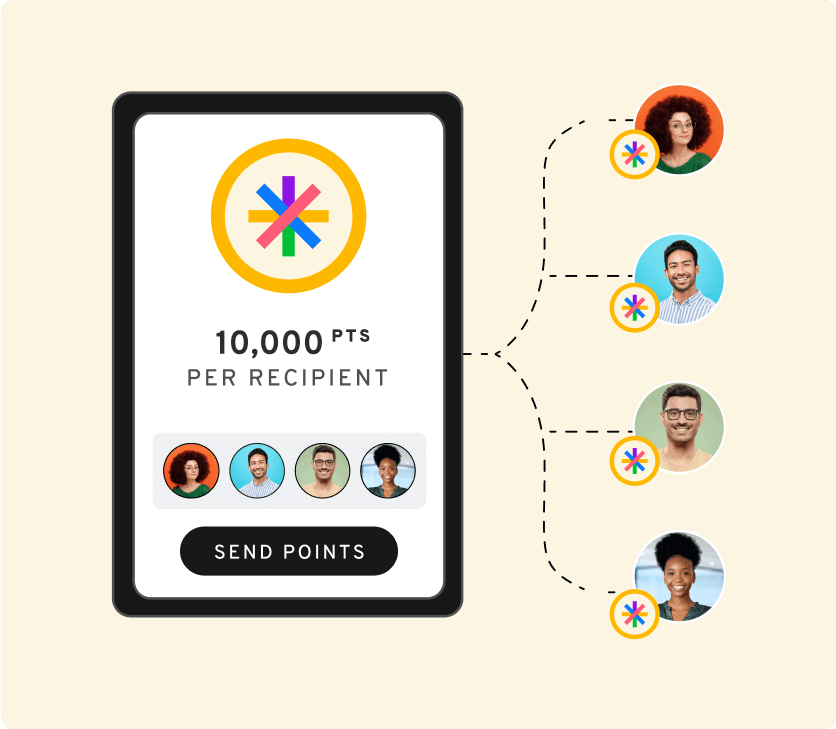
Give everyone a monthly or quarterly allowance of points to send, and make sending praise a two-click action rather than a form.
Rename the currency to something branded so it feels like yours – Keyfactor’s “KEYkudos” is a good template. Set a cadence expectation, too: weekly beats quarterly, because recognition that arrives close to the work reinforces it.
“A kudos program with Stadium Points handles the sending, tracking, and redemption in one place, so recognition doesn’t depend on someone remembering to post in a channel. Once it’s live, praise stops being an occasional event and becomes a habit the whole team owns.”
Attach every recognition to a specific company value so praise reinforces the behavior you want more of. Instead of a generic "great job," a teammate tags a shoutout with #CustomerObsessed or #OwnsTheOutcome – and suddenly the recognition is teaching the whole team what "good" looks like, not just making one person feel nice.
The mechanic is simple: add your values as selectable hashtags inside the recognition platform, the way Keyfactor did. Now every piece of praise doubles as a small, public lesson in culture.
Over a quarter, you can even see which values get recognized most and which are going quiet – a surprisingly honest read on how the team actually operates. Vague praise flatters the individual; values-linked praise shapes the group. It costs nothing extra and makes every shoutout do two jobs at once.
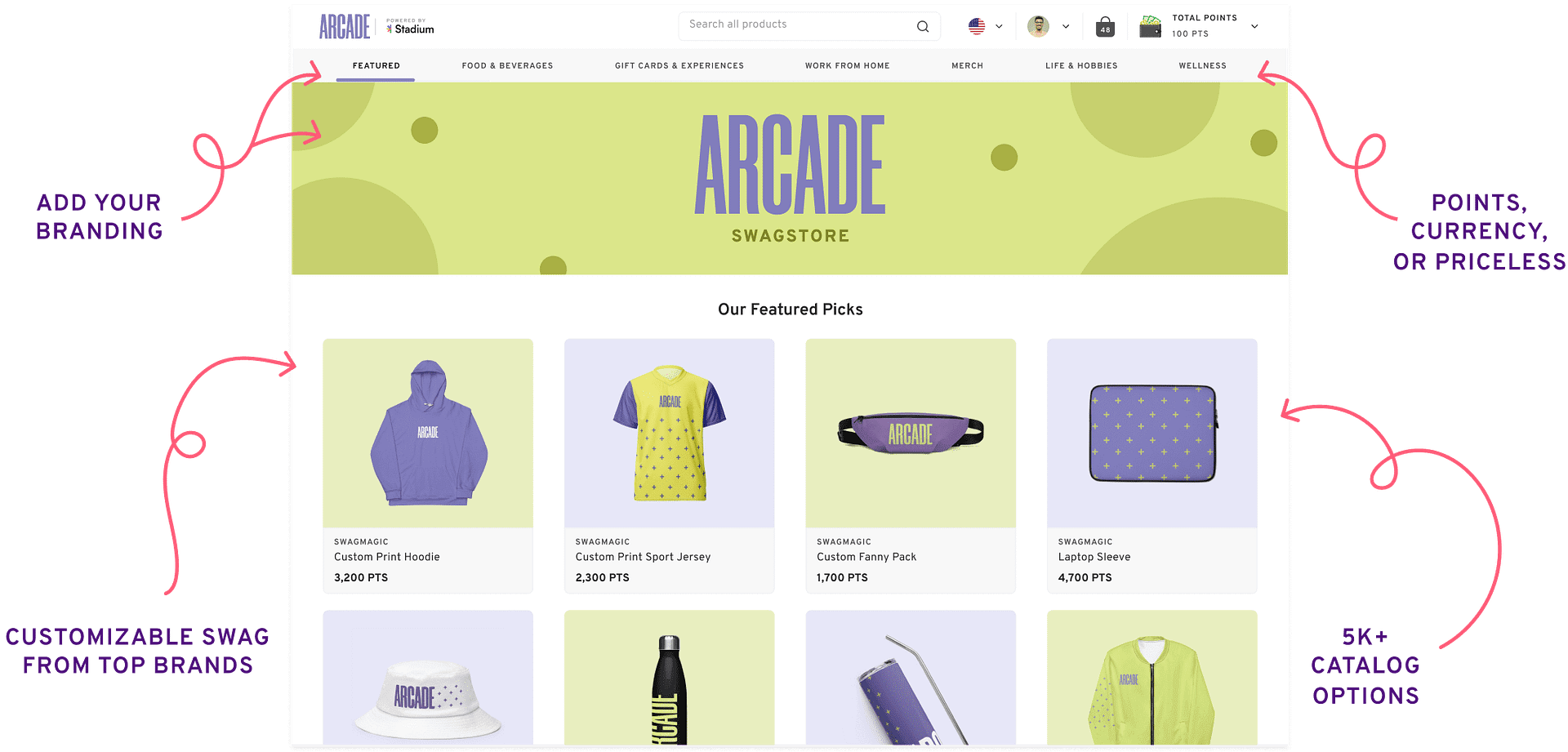
Replace the one-size-fits-all award with a shop where the recipient picks their own reward – swag, a gift card, a snack box, or an experience.
The reason is blunt: the same branded fleece lands flat because half the team doesn't want a fleece.
Choice is what turns a reward into something personal, and personal is what people remember.
In practice, you fund a budget or a points amount and the recipient chooses from the catalog, then it's fulfilled locally – they pick it, it ships from a nearby warehouse, done.
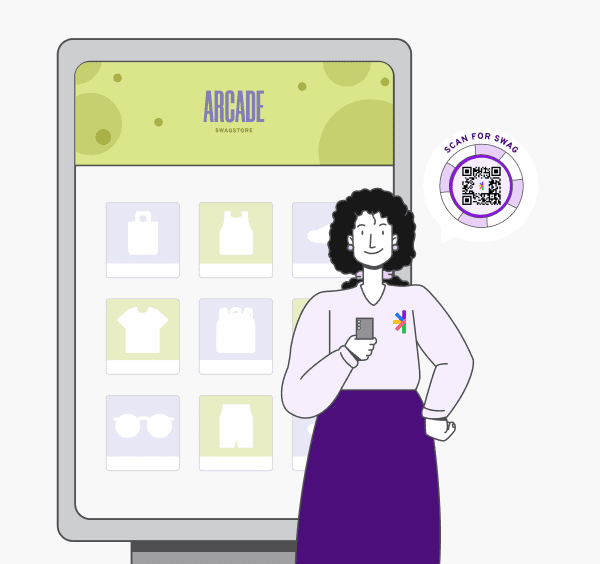
Stadium Shops put a 25,000+ product catalog behind each reward, and MagicLink™ covers the case where you don't have someone's shipping address – the recipient just adds their own.
For a distributed team, this is the difference between "we sent everyone a mug" and "everyone got something they actually use."
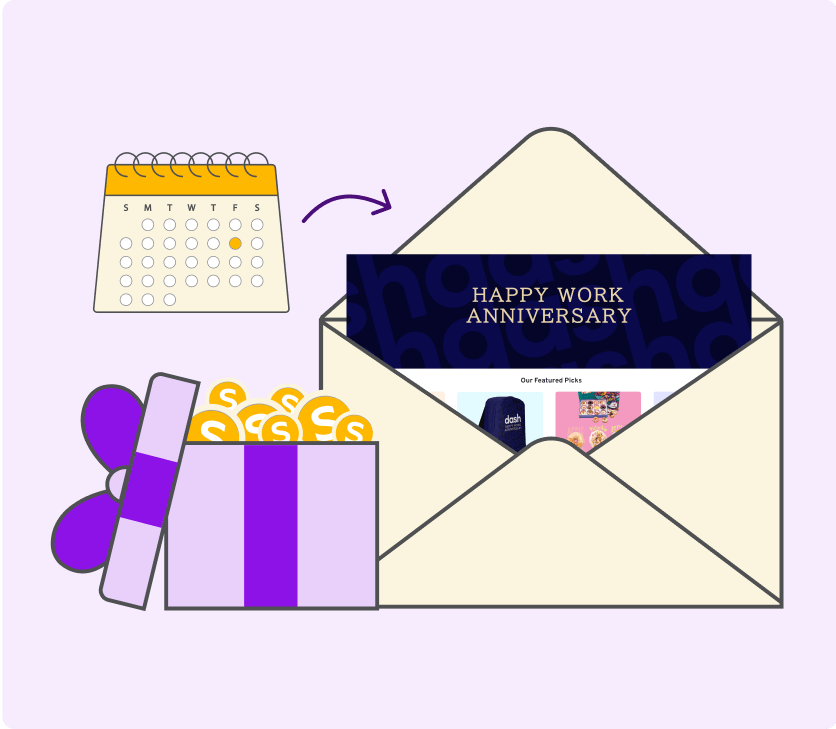
Set milestone gifting up once and let it run, so no anniversary ever gets missed. A missed three-year anniversary doesn't read as "HR is busy" – it reads as "they don't care."
And when you're a people team of one tracking a scattered workforce, missing them is almost guaranteed if it depends on memory and a spreadsheet.
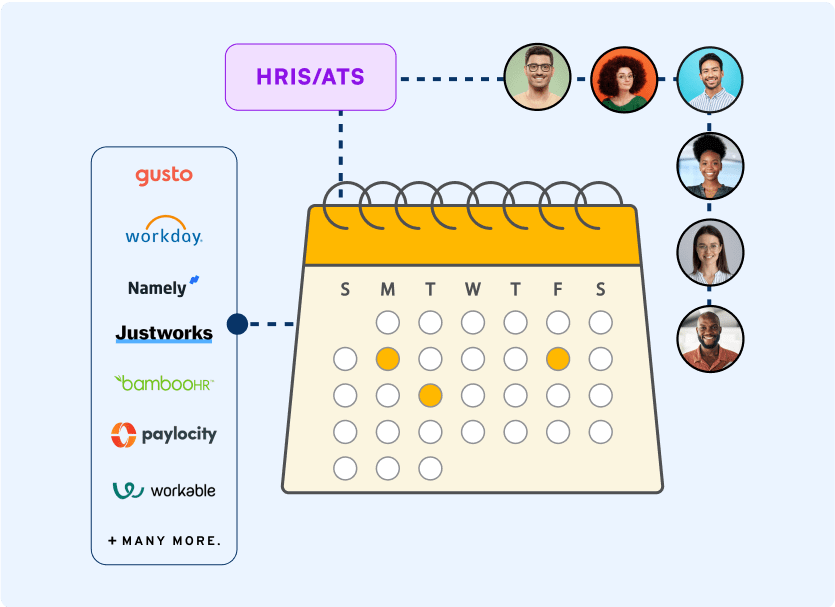
Configure the milestones from three-year through 25-year, with the points amount scaling up as tenure grows, then connect it to your HRIS so the trigger fires on the actual anniversary date.
The Automation Dashboard handles the timing and delivery; the employee gets points to a shop on the right day, every year, without anyone lifting a finger. You do the thinking once. After that, consistency stops being a task you can fail at.
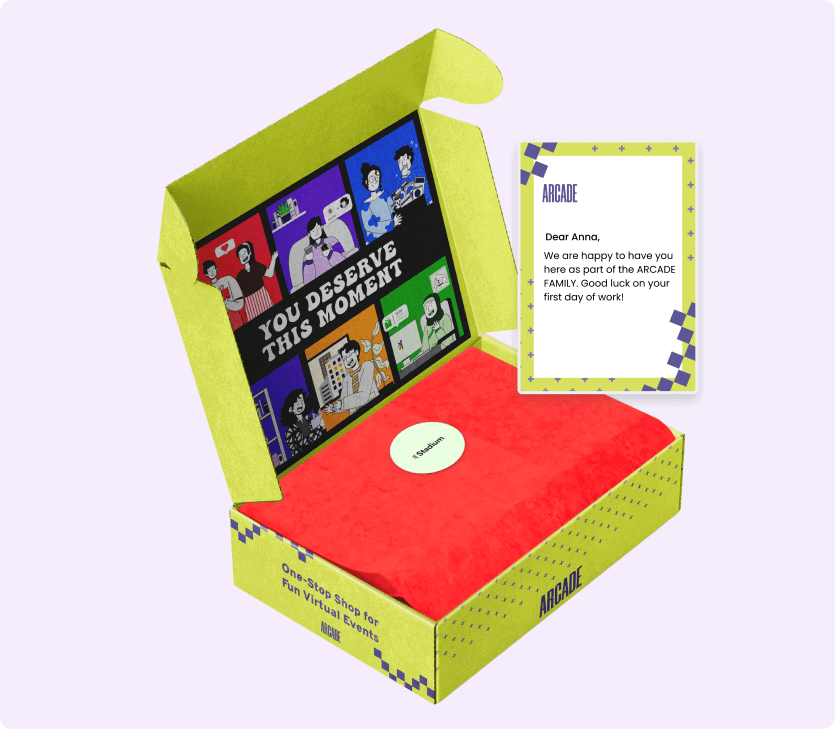
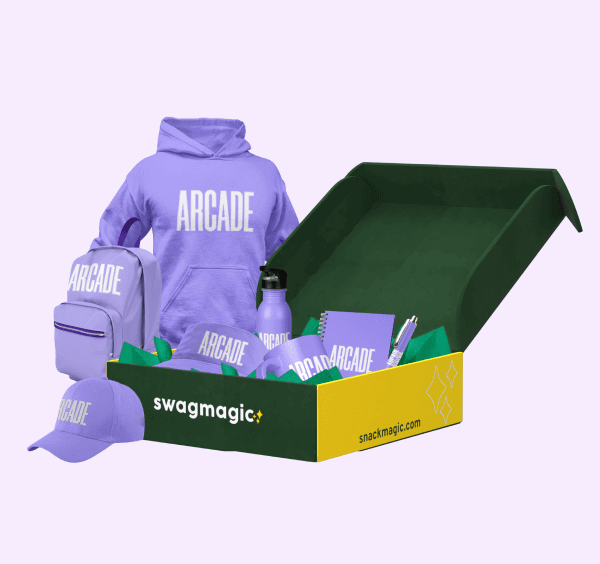
Trigger a branded swag kit the moment a new hire lands in your HRIS, so day one feels considered instead of chaotic. First impressions compound – a hire who unboxes a thoughtful kit before their first standup starts the job feeling like the company was ready for them. A hire whose "welcome swag" shows up six weeks late gets the opposite message.
Add fun, non-performance award categories that peers vote on, alongside your standard monthly standout. Traditional Employee of the Month goes stale fast and tends to reward the same three high-visibility people – meanwhile the person who quietly unblocks everyone never gets a mention. Categories like "Best Teammate" or "Calmest in a Crisis" spread recognition to the behaviors that hold a team together but never show up on a dashboard.
Let managers send a small, instant reward the moment they catch great work – a snack box or a handful of points, same day. Recognition has a short shelf life. A thank-you that arrives two weeks after the late-night launch save has lost most of its punch; the win and the acknowledgment should sit close together in time.
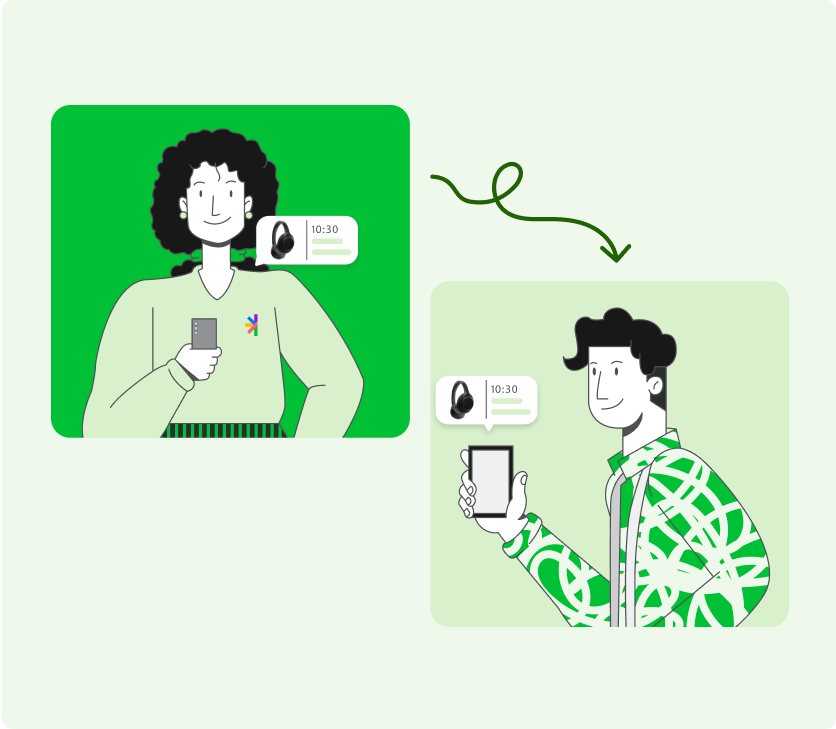
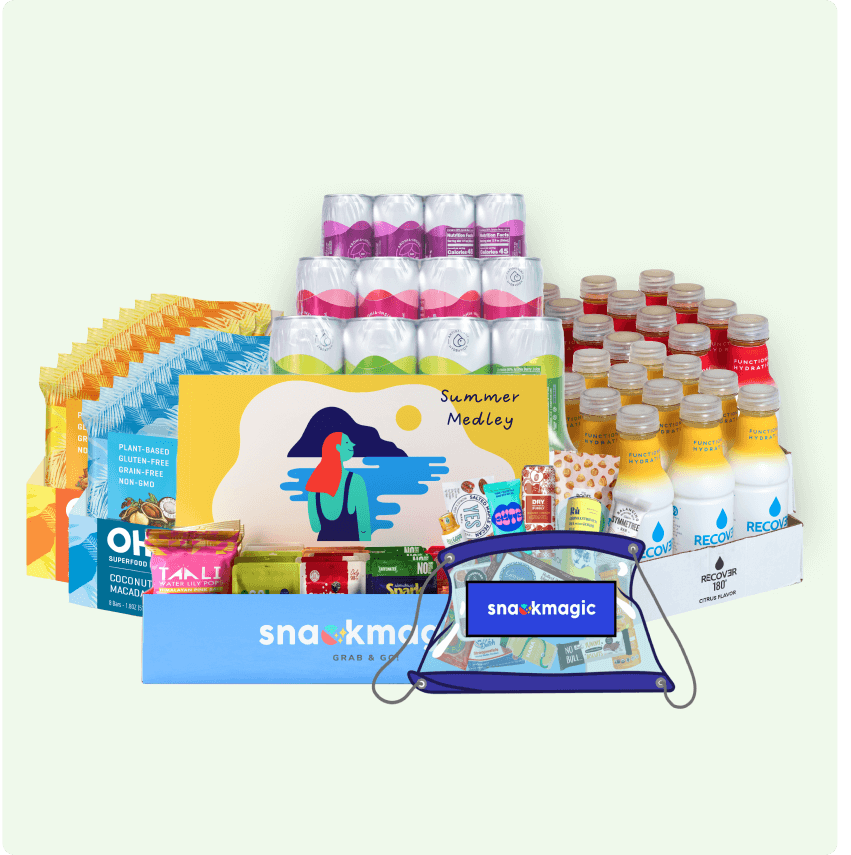
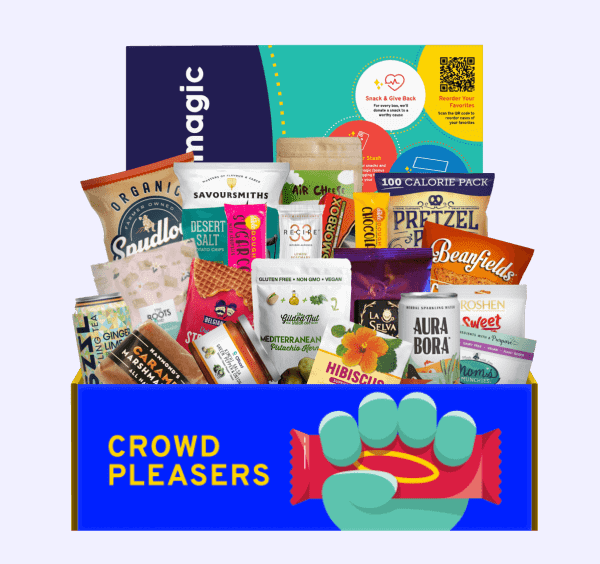
Give managers a standing budget or points balance and a fast way to send – Quick Recognize lets them recognize someone in under 30 seconds, so there's no friction between the impulse and the action. Pair it with a snack box from Snackmagic or Stadium Points the person can bank toward something bigger. The goal is speed: make it so easy to say "that was excellent, here's a little something" that managers do it in the moment instead of meaning to later.
Connection can’t be mandated from the top – people bond over things they choose, not activities they’re assigned.
The ideas here give employees room to build real relationships across teams and time zones, with just enough structure to get them started.
Keep them low-effort and optional; the moment “team bonding” feels like homework, it stops working.
Let employees start their own clubs – running, books, gaming, cooking, whatever they're into – and give each one a small budget and protected time.
The value is that connection forms around a shared interest, not an org chart, so a designer in Berlin and an engineer in Austin end up talking every week because they both love trail running. Those cross-org friendships are exactly the ties that make people stay.
Build low-effort rituals into the calendar that give the week a little texture – a Friday show-and-tell, a monthly pajama day, a "worst first job" story swap. Routine flattens energy over time, and a small recurring tradition gives people something to look forward to and, more importantly, something shared to reference later. Inside jokes are the connective tissue of a team, and traditions manufacture them.
Share food regularly, and for distributed teams, deliver it so everyone eats "together" even when they're apart. There's a reason breaking bread is universal – it slows people down and gets them talking about something other than the sprint. The problem in a hybrid or remote team is that the office lunch excludes everyone not in the building, and over time those people feel like guests at their own company.
Offer paid volunteer time and let employees pick the cause themselves rather than assigning one company charity. A single mandated volunteer day feels like a checkbox; letting people choose what matters to them turns it into something they're proud of. It also surfaces shared values – you find out three people on your team all care about literacy, and now they've got a reason to work together outside of work.
Flip the usual format so employees speak first. In a reverse town hall, leadership fields questions and listens instead of presenting; in a stay interview, you sit down with someone still on the team and ask what keeps them – and what might tempt them away – before they're halfway out the door. Exit interviews tell you why people left. Stay interviews let you fix it while they're still here.
Randomly pair people from different departments for a 20-minute chat, with a light prompt to break the ice. Silos quietly kill engagement – people lose context on what other teams do, assume the worst about delays, and stop feeling like part of one company. A few minutes of unstructured conversation rebuilds the human layer that Slack threads erode.
People leave when they stop growing, which makes development one of the most reliable retention levers you have.
Treat growth as a form of appreciation – investing in someone’s future is one of the clearest ways to show you value them.
The ideas here are deliberately lightweight, because the heavy, formal programs are usually the ones that stall.
Set up short, opt-in mentoring matches across levels and teams – 20 minutes, one topic, no six-month commitment. Formal mentorship programs collapse under their own weight; people sign up, get matched, meet once, and quietly ghost. Micro-mentoring works because the ask is tiny and the value is immediate: a junior analyst gets 20 minutes with someone two rungs up, and both walk away having actually connected.
Match people loosely by interest or the skill someone wants to build, rotate the pairings, and keep the structure to a single shared doc. "Office roulette" – randomly pairing people for a short career chat – works the same way without any hierarchy at all. The low overhead is the whole point: make it so easy to say yes that people do it repeatedly, and the relationships build from there.
Run employee-led sessions where people teach each other a skill – then formalize it with a "skills barter board" where someone offers SQL basics in exchange for design feedback. Your L&D budget is finite, but the knowledge already inside the team is not, and most of it never gets shared. A lunch and learn turns one person's expertise into everyone's, and the person teaching gets the recognition of being the expert in the room.
Give each person an annual budget for courses, books, certifications, or conferences, and let them spend it on what moves their career. The signal a stipend sends is as valuable as the learning itself: it says the company is willing to put real money behind your growth, no approval-committee gauntlet required. People stay where they can see themselves getting better.
Set a clear per-person amount, keep the approval process light, and let employees choose within a few sensible guardrails. The autonomy matters – a developer who picks their own conference is far more invested in getting something out of it than one who's assigned a generic seminar.
Offer low-stakes "tours" where people spend a day shadowing a neighboring team. Most employees can't picture a future at the company because they've never seen what the other roles do all day. A shadowing day fixes that – it builds cross-team empathy, kills a few unfair assumptions, and quietly shows people internal career paths they didn't know existed.
Tie development milestones to recognition – celebrate a completed certification or a finished course the same way you'd celebrate a work anniversary. Growth that goes unnoticed starts to feel optional, and optional things get dropped when work gets busy. When finishing a hard course earns a public shoutout and a reward, learning becomes something the team sees and values, not a private slog.
Here’s the thing about engaging remote and global teams: the ideas aren’t exotic. Remote employees want the same things everyone wants – recognition, connection, good food, a sense of belonging. What breaks for distributed teams isn’t the idea. It’s the delivery. Shipping across borders, customs fees, returned mail, three-week transit times, and the quiet exclusion of anyone who isn’t in the HQ building.
That’s why so many “remote engagement” efforts feel thin. A company runs a great in-office culture and then bolts on a monthly video quiz for the remote folks, and wonders why distributed staff still feel like second-class citizens. The fix isn’t a better quiz. It’s solving the logistics so the good ideas actually reach everyone at the same time, wherever they are. Do that, and remote engagement largely takes care of itself.
The difference is local fulfillment. The old way is one vendor that “ships globally” but not locally, so gifts arrive late, taxed, or not at all – and half the point is lost. Stadium fulfills locally in 170+ countries through a network of 500+ warehouses, so a teammate in Manila gets the same moment as one in Austin, on the same day. MagicLink™ handles addresses you don’t have – the recipient just adds their own – and everything scales from 1 to 1,000+. That’s a logistics problem, and it’s a solved one.
Run the exact same recognition program for remote staff that you run at HQ, with rewards fulfilled locally so nobody waits weeks for their moment. Remote employees miss the ambient shoutout culture of an office – the hallway "nice work," the visible high-five – so formalizing recognition matters even more for them than for in-office teams. When it's built into a program, distance stops determining who gets seen.
The delivery is what makes it real. A global recognition program with local fulfillment in 170+ countries means the reward a remote teammate earns shows up promptly and untaxed, not three weeks late via a customs office.
Send snack boxes to remote teammates so they share in the perk that in-office staff take for granted. The stocked office kitchen is one of those invisible inequities of hybrid work – it's a real, daily benefit for the people in the building and a complete non-event for everyone else. Closing that gap is a small gesture with an outsized signal: we didn't forget you're out there.
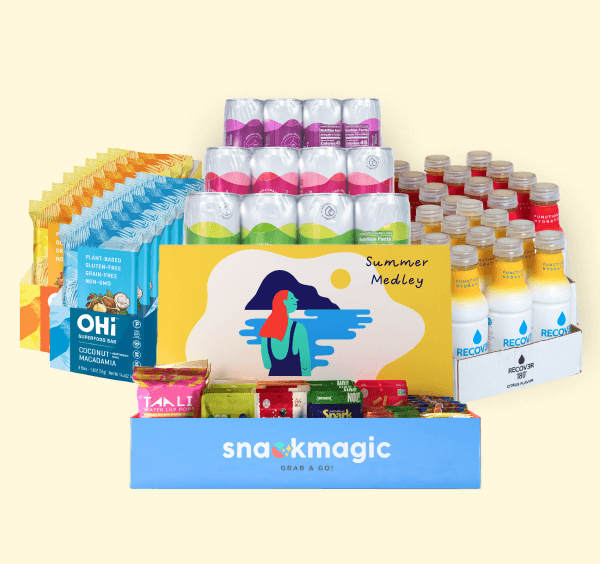
Ship a snack box from Snackmagic on a recurring cadence, or tie it to team moments like an all-hands or a sprint close. Because boxes are fulfilled locally, the remote teammate in São Paulo gets theirs as reliably as the office crew gets the restocked pantry. It's a low-cost, high-warmth way to make remote staff feel like full members of the team rather than names on a video grid.
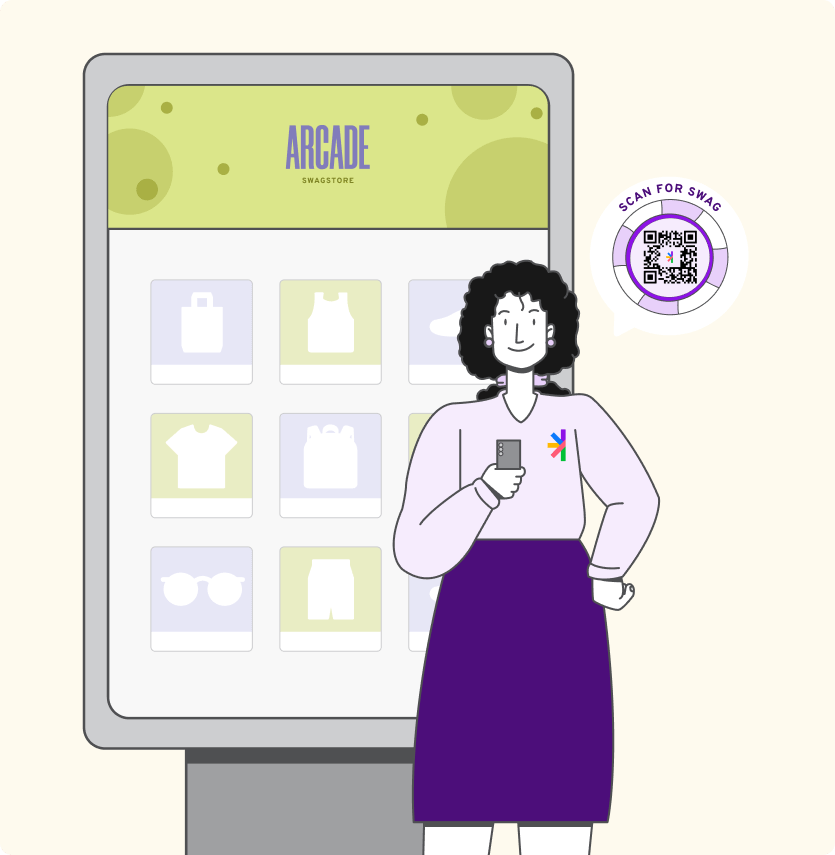
Let remote hires pick their own swag from a shop and enter their own shipping address through a link – no HR spreadsheet of home addresses required. Collecting and maintaining global addresses is a genuine operational nightmare and a privacy headache, and it's the reason a lot of remote swag simply never gets sent. Take that task off the people team entirely and the swag actually ships.
Here's the flow: you share a link, the remote employee picks what they want from the shop and adds their address, and it's fulfilled locally. MagicLink™ and on-demand swag mean no minimums, no warehouse of unused inventory, and no chasing people in a spreadsheet for their mailing details. The employee gets swag they chose, delivered to a place only they had to know. Nobody's apartment becomes the company's fulfillment center.
Pair a virtual celebration with a snack box everyone opens together on the call, so remote events have a shared physical moment. Purely digital events tend to feel flat and forgettable – another grid of faces, another hour on mute. Adding something everyone can touch, taste, and open at the same time gives a virtual gathering the sensory, communal quality that makes in-person events stick.
Build recognition into async workflows so time zones never block appreciation. If recognition only happens in live meetings, everyone working outside HQ hours gets structurally excluded – their wins happen while the rest of the team is asleep, and by the time anyone's online, the moment has passed. Async rituals fix that by making praise something you post, not something you have to be present for.
The best engagement idea on this list is nearly free. That’s not a budget consolation prize – it’s how engagement actually works.
Recognition, feedback, flexibility, and connection cost very little and move engagement the most, while the expensive, splashy perks tend to deliver a quick sugar high and little lasting change. The real constraint on most teams isn’t money. It’s consistency.
Create one dedicated space where recognition is visible and permanent – a praise channel or a company Feed. Most praise today happens in DMs and one-to-one messages, where it makes one person's day and then vanishes. Moving it into the open costs nothing and changes the dynamics entirely: praise becomes repeatable, other people are prompted to add their own, and newcomers can see what the team values.
Have managers write specific, personal thank-you notes – on actual paper, by hand. It's free, it takes ten minutes, and it's disproportionately memorable precisely because it's rare in a world of Slack reactions and auto-generated kudos. People keep these notes on their desks for years. The catch is specificity: a note that names the exact thing the person did and why it mattered lands; a generic "thanks for all you do" reads like a form letter.
Hand out small point drops for wins and let people accumulate them toward a reward they choose. One-size gifts waste budget on things people don't want; micro-rewards stretch the same money further because nothing gets spent on a mug destined for a drawer. Small and frequent also beats large and rare – a little recognition every week keeps engagement warm in a way an annual bonus can't.
Reward great work with time instead of money – an early Friday, a surprise afternoon off, a bonus recharge day. For a cash-strapped team, time is the reward that costs no budget and is valued enormously, especially by anyone juggling life outside work. Handing someone their Friday afternoon back after a brutal launch week can mean more than a gift card ever would.
Bring back the unstructured, near-zero-cost connection that offices used to create by accident – a walking coffee chat, a standing "watercooler" call with no agenda. So much of workplace connection used to happen in the in-between moments, and remote and hybrid work erased most of them. You can recreate them deliberately for almost nothing, and the payoff in belonging is real.
Run a simple anonymous channel for ideas and concerns – and make the whole value the visible acting on it. A suggestion box costs nothing to set up and does nothing on its own; plenty of companies have one that's become a running joke because ideas go in and nothing ever comes out. People disengage fast when they learn their input disappears into a void.
The mechanic that matters is the loop: collect input, then publicly report back on what you heard and what you're doing about it, even when the answer is "not now, and here's why."
Wellbeing shows up in nearly every engagement list, usually as vague “wellness” gestures that go unused. The ideas here stay concrete and avoid wellness-washing – because a meditation app nobody opens does less for engagement than a predictable schedule and a real day off. Focus on the things that lower stress and make people feel like humans, not resources.
Give people a genuine say in when they work – and remember that predictability lowers stress as much as flexibility does. Burnout isn't only about hours; it's about the feeling of having no control over them. Someone who can start early to make school drop-off, or who knows Fridays are protected, carries less low-grade stress into every task. And a knowable schedule lets people plan a life around work instead of the reverse.
Run a monthly movement or wellness challenge with a fun, social hook and a reward for taking part. Wellness perks sitting unused in a benefits portal do nothing; a challenge with teammates, a leaderboard, and a prize gets people to actually participate. Keyfactor's annual May Movement Challenge is a clean model – employees pair up in teams and aim for 30 to 150 minutes of activity a day, rewarded with a snack box or points.
Offer a wellness stipend people can spend on what genuinely helps them, and stock real snacks that account for allergies and dietary needs. "Wellbeing" means different things to different people – a gym membership for one, therapy for another, a standing desk for a third – so a flexible stipend beats a single prescribed perk. And for the everyday, good snacks are a small, concrete way to signal that the company looks after people.
Protect people's focus and rest with company-wide recharge days and meeting-free blocks. Always-on culture erodes engagement one interrupted afternoon at a time, and individual "take PTO if you need it" policies fail because nobody wants to be the only one offline. A shared day off – like Keyfactor's "Second Friday," where the whole company is out every second Friday of the month – works because everyone rests at once, with no guilt and no inbox filling up.
Our offerings and curated swag catalog will take your engagement to new heights.

Customize everything from gifts to branding.

Points, currency, or a number of gifts.

Gift on a whim—there’s always a reason to gift.

Set and forget for any occasion.

Give once or set ongoing recognition.

Guardrails, analytics, and insights.

HRIS, CRM, Slack, Teams, and more.